
How to Make a Cup You Actually Enjoy
“I don’t like tea.”
I hear that quite often at Tea of Life Apothecary. But when I ask a few more questions, there’s usually a story behind it.
Maybe Grandma made tea so strong it almost needed its own spoon. Maybe someone left a tea bag in the cup until the last sip. Or perhaps the only tea you’ve tried was bitter, bland, or simply a flavor you didn’t enjoy.
Those experiences can convince you that all tea tastes that way.
Before you give up on tea, though, try changing how you prepare it. A different blend, a smaller amount, or a shorter steep can make a surprising difference.
You don’t have to make the strongest possible cup to make a good cup.
First, Know What’s in Your Cup
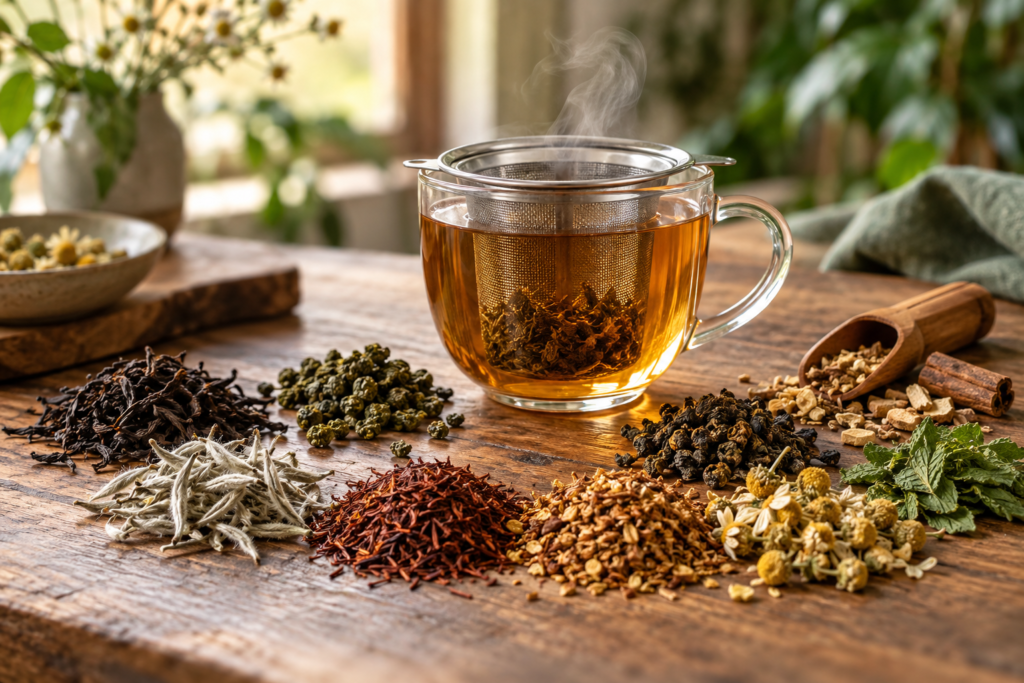
We use the word “tea” for several different kinds of beverages, but the ingredients don’t all behave the same way in hot water.
Black, green, white, and oolong teas come from the same plant, Camellia sinensis. Different processing methods give them their distinct flavors. They naturally contain caffeine.
Herbal teas, also called herbal infusions or tisanes, can contain leaves, flowers, stems, seeds, fruits, roots, and bark from other plants.
Rooibos and honeybush are herbal infusions, too. They are naturally caffeine-free, although a finished blend can contain caffeine if other ingredients contribute it.
This distinction matters because delicate green tea, a floral herbal blend, and a mixture of dense roots shouldn’t automatically receive the same brewing instructions.
Start with the directions for your particular blend. Use general brewing charts as a guide when specific instructions aren’t available.
Why Does Tea Taste Bitter?
Several things can contribute to an unpleasant cup.
1. Using too much tea
A generous scoop might seem like the best way to get more flavor, but it can give you an overwhelming cup. For someone learning to enjoy our teas, I often suggest starting with ½–1 teaspoon per 8 ounces of water, unless the blend’s directions call for a different amount. That is a gentle starting point for flavor—not a universal herbal dose. A teaspoon of fluffy flowers weighs much less than a teaspoon of finely cut roots. Some large-leaf teas also need more volume. Check your mug: a 16-ounce mug holds two standard 8-ounce cups. Start with a measured amount so you know what to adjust next time.
2. Steeping for too long
Steeping is the process of drawing soluble compounds from the leaves or herbs into water. Time, temperature, ingredient size, and the amount you use all influence what ends up in your cup. With traditional tea leaves, prolonged steeping can produce more bitterness and astringency. Bitterness is a taste; astringency is that dry, puckering feeling in your mouth.
If you want a fuller cup of black or green tea, a little more leaf within the recommended brewing time may taste better than leaving the same leaves soaking indefinitely. Herbal blends are different. Some need longer preparation, and some ingredients are naturally bitter. The goal is to follow the needs of the blend rather than assume that every tea should steep for either two minutes or twenty.
3. Using water that is too hot for the tea
Freshly boiled water is appropriate for many herbal infusions, but delicate green teas often taste better at a lower temperature. Hotter water changes how quickly compounds are extracted. With some teas, that can turn a pleasant cup harsh. For example, the UK Tea & Infusions Association recommends approximately 176°F for green tea and hotter water for black tea.
4. Choosing a flavor you don’t enjoy
Sometimes the preparation is fine, and the blend simply isn’t for you. You might enjoy blueberry and cinnamon more than an earthy root blend. You might prefer mint, warming spices, or a tea-and-coffee combination. Your first cup doesn’t have to be the most intensely herbal option on the shelf.
A Practical Brewing Reference
These are starting ranges for ordinary hot brewing. Individual varieties and mixed blends may require different instructions.
| Tea type | Starting water temperature | Starting steeping time |
|---|---|---|
| Green tea | 160–180°F | 1–3 minutes |
| White tea | 170–185°F | 2–5 minutes |
| Oolong tea | 185–205°F | 2–5 minutes |
| Black tea | 195–205°F | 3–5 minutes |
| Rooibos or honeybush | Freshly boiled water | 5–10 minutes |
| Herbal leaf-and-flower blends | Freshly boiled water | 5–10 minutes, or label directions |
| Root-and-bark preparations | Depends on the ingredients | May require a directed simmer rather than a simple steep |
Tea varieties differ substantially, so adjust within the blend’s instructions rather than treating any chart as an exact rule.
For dried herbal infusions containing roots or bark, use rolling-boiling water and allowing at least five minutes of infusion. If that produces a cup that tastes too strong, use less of the blend rather than simply shortening the recommended preparation.
Flavor and Herbal Preparation Are Two Different Questions
This is one of the most important things I want customers to understand. “How do I make this taste good?” and “How should this herb be prepared for its intended use?” aren’t always the same question. For an everyday beverage, you can adjust the amount, flavor, and preparation to suit your preferences. For a targeted herbal preparation, the plant part, quantity, method, and frequency matter. A pleasant flavor does not tell you how much of a particular constituent you’ve extracted. Neither does a dark color.
A few useful terms:
- Infusion: Pouring hot water over plant material and allowing it to steep.
- Decoction: Gently simmering suitable plant material in water, often used for certain roots, bark, and seeds.
- Tincture: An extract made with a solvent such as alcohol and water, with its own concentration and directions.
A mixed herbal blend may contain delicate flowers alongside dense roots. That doesn’t mean you should automatically simmer or boil the entire blend. Follow its directions or ask for help. Research shows that brewing conditions affect the compounds extracted into tea, but laboratory antioxidant measurements don’t establish a medicinal dose or guarantee a health outcome.
More bitter does not automatically mean more beneficial.
Can You Steep the Same Leaves Again?
Often, yes—and it can be a lovely way to explore a blend. The second cup may taste softer, less sweet, less fragrant, or simply different. Some ingredients release much of their flavor early, while others continue contributing to later infusions.
Studies of successive tea infusions show that later brews can still contain polyphenols. However, the amount and composition vary; that does not establish equal medicinal value from every cup or apply automatically to every herbal mixture.
For re-steeping:
- Follow the blend’s initial brewing directions.
- Drain the infuser after brewing.
- Re-steep promptly with fresh hot water.
- Taste and adjust the next infusion.
- Stop when the flavor is no longer enjoyable.
You may want a longer second steep, but adding five or ten minutes isn’t a universal rule, especially for green or black tea. For everyday blends, a small pinch of fresh leaves can refresh the flavor. When re-steeping targeted herbal blends, follow the serving directions rather than repeatedly adding more. Re-steep during the same brewing session, and don’t leave wet leaves sitting at room temperature all day or overnight. If you must save them, place them in the refrigerator but do not use if they have been sitting longer than 24 hours.
The number of cups you get from a bag depends on the blend’s weight, how densely it measures, your serving size, and whether it re-steeps well. A later infusion is an additional cup to enjoy—not a guaranteed repeat of the first cup’s strength.
Make Tea Fit Your Taste
You have more options than drinking every blend plain.
Try a little maple syrup
Personally, I prefer maple syrup to honey in my tea. I enjoy the richer flavor, and honey’s aftertaste simply isn’t my favorite. Start with a small amount and taste before adding more. Maple syrup and honey both count as added sugar.
Add the milk you enjoy
I often recommend almond or coconut milk for their flavor and texture. Unsweetened versions can be useful if you’re watching added sugar.
Limit dairy milk and creams as is can bind to various components and cancel tea’s antioxidants as milk proteins can interact with tea polyphenols. Choose based on your preferences, allergies, tolerances, and nutritional needs. Plant milks vary considerably, so check the label.
Combine compatible flavors
A flavored tea can make an earthy herbal blend more approachable, if the two blends require different temperatures or steeping times, brew them separately and combine the finished liquids. Keep the herbal portion within its directions; adding flavored tea doesn’t cancel its precautions.
Think beyond a sweet beverage
Some food-grade herbs work beautifully in chicken broth, bone broth, soups, or other savory preparations. A savory setting can make earthy flavors feel more familiar. But use ingredients appropriate for cooking—an herbal wellness blend is not automatically an all-purpose soup seasoning. Ask before adding a targeted blend to a shared family meal.
Find Your Starting Point at Tea of Life
Different blends offer very different experiences. Here are a few customer favorites.
Moon Water: An Evening Ritual
Moon Water is one of our best sellers, created with evening relaxation in mind. Its ingredients include chamomile, skullcap, passionflower, valerian, and other herbs. It can be part of a quiet wind-down routine, but responses vary. Passionflower and valerian can cause drowsiness, so try it when you don’t need to drive and check for interactions with medicines, alcohol, or other calming products. We also offer a tincture, which has separate directions. Remember tea is not as strong as taking a medication so do not enter into a tea ritual expecting a cup to be the equivalent to taking a sleep aid.
Dandelion & Milk Thistle: An Earthier Herbal Experience
Our Dandelion & Milk Thistle blend is a popular choice among customers interested in traditional herbal wellness. It offers an opportunity to explore earthy flavors and discuss how different plant parts are prepared. Be sure to follow the directions rather than assuming every root-containing tea should be simmered or steeped longer. Many people don’t realize the importance of supporting the liver prior to trying to remove heavy metals, parasites, or viruses. Almost everything passes through the liver so it is important to prep the liver and support its function for 4-6 weeks before starting a detox protocol.
Blueberry Cinnamon Crumble: A Cozy Place to Begin
If you think herbal tea must taste intensely earthy, this is one I’d love for you to explore. Its green rooibos base is naturally caffeine-free—green rooibos is different from green tea. My favorite serving suggestion is a touch of almond milk, a little maple syrup, and just a smidge of grass-fed butter. To me, it’s almost like drinking a muffin.
Stars Over Paint Street: For the Tea-and-Coffee Curious
Created for a special event, this blend became so popular that we decided to keep it. Think of walking into a diner in the morning: coffee brewing, pancakes arriving, and the comforting aroma of pastries. All of this is captured in a single cup. It’s a different starting point for someone who hasn’t connected with traditional herbal flavors. Because it includes coffee and black tea together, consider its caffeine content when choosing when to enjoy it.
Choose an Infuser That Works for You
You don’t need an elaborate setup.
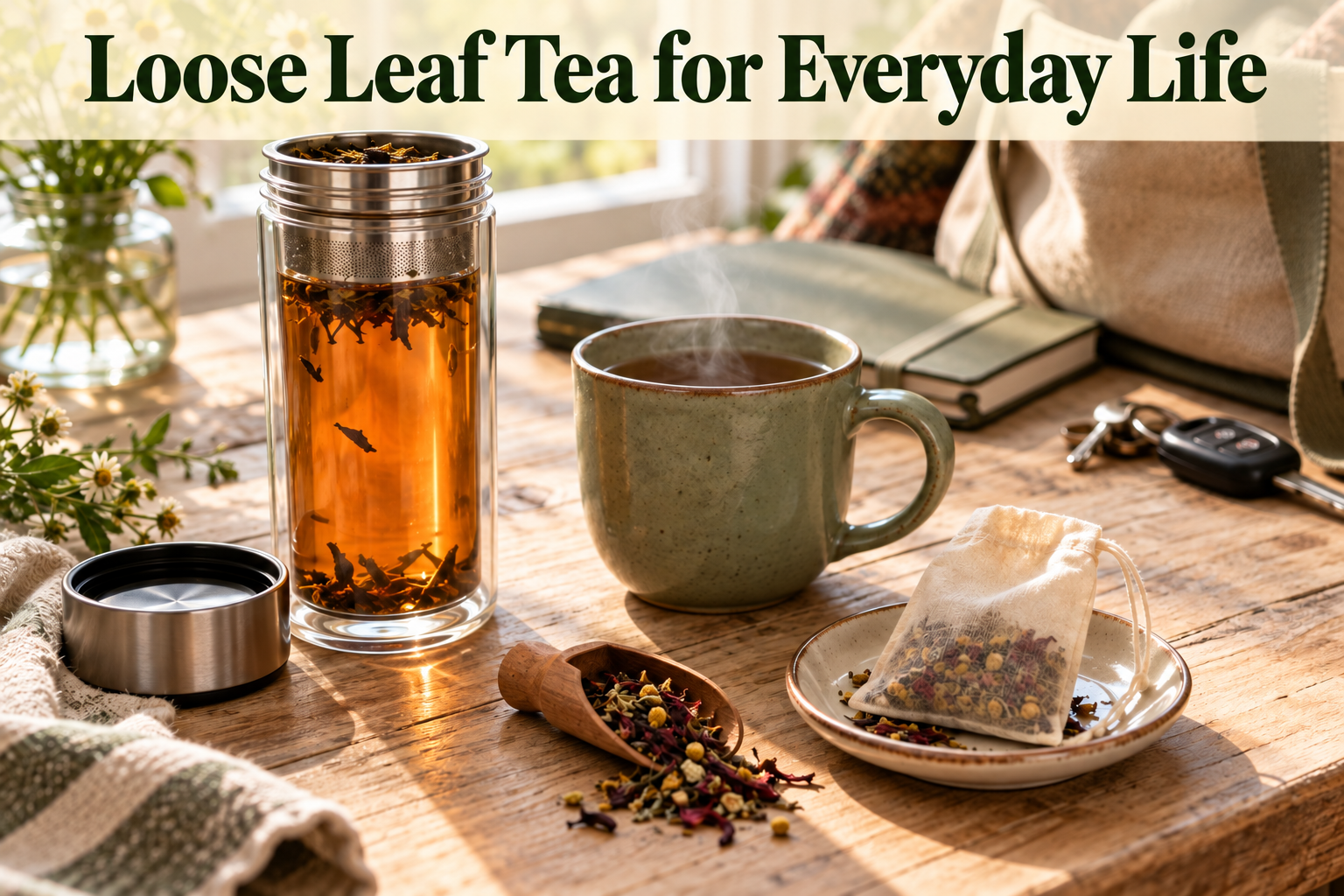
At Tea of Life, we carry several options:
- In-cup steepers and infusers for a convenient individual cup.
- Unbleached fillable tea bags for people who prefer a familiar, portable option.
- Larger infuser vessels for preparing more tea to pour into a pitcher.
Give the ingredients enough room for water to circulate. A tightly packed infuser can produce an uneven brew. For fine-cut herbs, look for a fine mesh or suitable filter. Most importantly, choose something you find easy to fill, remove, and clean. It is important to point out that loose herbs are FINE TO CONSUME if they happen to find their way into your cup. These may be annoying, but they do not cause issues.
How to Rescue a Disappointing Cup
| What you notice | What to try |
|---|---|
| Too strong | Remove the leaves and dilute with hot water. |
| Bitter or drying | Dilute this cup; next time, adjust the leaf amount, temperature, or steep within the blend’s directions. |
| Too weak | Check your mug size and measurement; try slightly more tea next time. |
| Flat or dull | Try fresh drinking water or filtered water, and check how the dry tea has been stored. |
| Herbal flavor feels overwhelming | Use a smaller permitted amount or combine the prepared tea with a compatible flavored tea. |
| Second steep tastes thin | Enjoy it as a lighter cup, refresh a suitable blend with a small pinch, or finish with that infusion. |
| Cloudy after chilling | Some teas cloud as they cool; cloudiness alone doesn’t establish spoilage. Consider handling and storage, too. |
For iced tea, remember that melting ice dilutes flavor. Brew according to directions, remove the leaves, and cool promptly. If needed, use a little more tea initially rather than leaving it steeping far beyond its instructions.
Try Changing One Thing at a Time
If a cup disappoints you, avoid changing everything at once. Measure the tea and water. Set a timer. Note the temperature. Then change one variable for the next cup. That gives you a useful answer: perhaps you like less leaf, a cooler green-tea brew, or a completely different flavor. Tea should be something you look forward to—not something you force yourself to tolerate.
Let’s Find Your Kind of Tea
If you’ve always said, “I don’t like tea,” I’d love to hear what you tried and what you didn’t enjoy. Too bitter? Too earthy? Not enough flavor? Unsure how to prepare it? Those details help us find a starting point that suits you.
Visit Tea of Life Apothecary at 19 West 2nd St., Chillicothe, Ohio, and we can talk through blends, flavors, and brewing tools together.
Tuesday–Friday: Noon–5 p.m.
Saturday: 10 a.m.–3 p.m.
Outside our area? Message us with your questions or explore our selection at www.teaoflifeapothecary.com. I’m happy to help you understand our blends and how to prepare them.
—Angel, nurse, herbalist, and owner of Tea of Life Apothecary
This article provides general education. Herbal products can interact with medicines and may be unsuitable during pregnancy, breastfeeding, or certain health conditions. Follow individual product directions and consult your healthcare professional about targeted herbal use.