
Herbal Teas vs. Traditional Teas: What’s the Difference?
If you’ve ever wandered down the tea aisle, you’ve probably noticed boxes labeled herbal tea sitting right next to green tea or black tea. At first glance, they might seem like the same thing—but they’re not. Knowing the difference can completely change how you choose your teas for health, energy, and daily rituals.
At Tea of Life Apothecary, we love teaching people the difference, not just in traditional teas, but also herbal teas vs. traditional teas, because once you understand what’s in your cup, you can choose teas that work best for your body, your mood, and even your spirit.
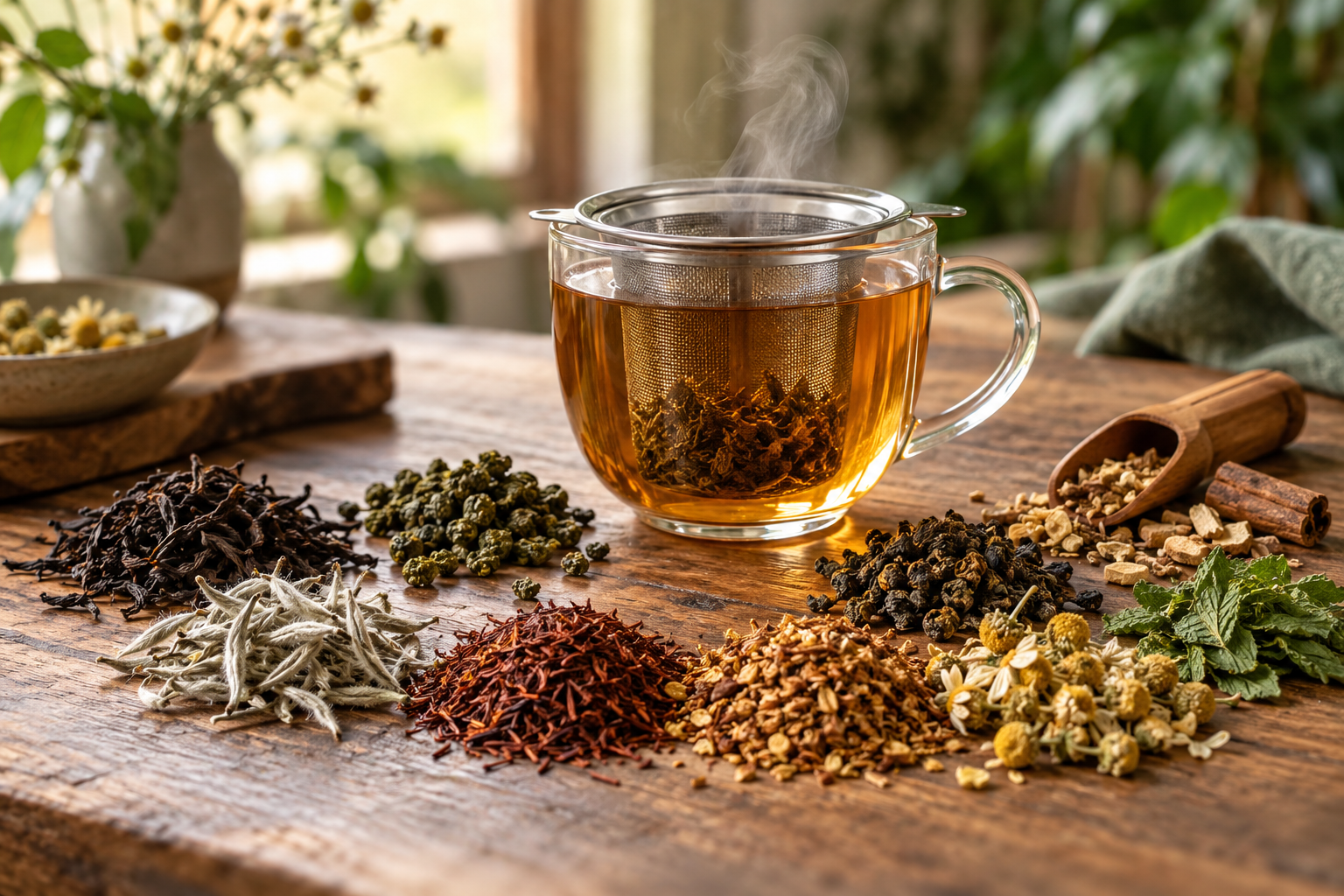
Traditional Teas (Green, Black, White, Oolong, Pu-erh)
All traditional teas come from one plant: Camellia sinensis. What makes them different is the way the leaves are harvested and processed. Oxidation (exposure of leaves to air), fermentation, and drying methods create distinct flavors, colors, caffeine levels, and health benefits.
- White Tea – The least processed. Made from young buds and leaves that are naturally dried. Light, delicate, and lowest in caffeine. Rich in antioxidants that protect skin and slow aging.
- Green Tea – Lightly steamed or pan-fired to prevent oxidation. Fresh and grassy in flavor with a bright green color. Rich in catechins that support metabolism, heart health, and even stem cell activity (like in our ReGen Green Tea).
- Oolong Tea – Semi-oxidized and partially fermented. Its flavor ranges from floral and fruity to warm and toasty. Known for supporting digestion, mental focus, and a calm yet energized state.
- Black Tea – Fully oxidized, which gives it a bold taste and higher caffeine content. A steady energy source that also supports circulation. Often used as the base for chai or Earl Grey.
- Pu-erh Tea – Fermented and aged for months or even years. Smooth, earthy flavor. Traditionally used to aid digestion, balance cholesterol, and support detoxification.
💡 Caffeine & Calm: Traditional teas contain caffeine, but unlike coffee, they also provide L-theanine—an amino acid that promotes calm, focused energy. This gives tea its unique ability to energize without the crash.

Herbal Teas (Tisanes)
Herbal teas are entirely different—they don’t come from the Camellia sinensis plant. Instead, they’re made from herbs, flowers, fruits, roots, and spices. This means they’re naturally caffeine-free and each blend offers unique wellness benefits.
At Tea of Life Apothecary, our blends use the whole plant for maximum effect:
- Roots (ginger, burdock, dandelion) – ground and energize digestion, detox, and immunity.
- Leaves (nettle, peppermint, tulsi) – nourish with vitamins, minerals, and chlorophyll.
- Flowers (chamomile, calendula, elderflower) – calm inflammation and lift the spirit.
- Stems & Bark (cinnamon, licorice) – warm, balance, and protect the body.
This full-spectrum approach means you’re not just sipping flavored water—you’re drawing vitality from every part of the plant.
Benefits of Herbal Teas:
- Naturally caffeine-free, safe for children, evenings, or anyone sensitive to stimulants.
- Each herb carries unique gifts: Chamomile calms. Nettle nourishes with minerals. Elderberry boosts immunity. Peppermint eases digestion.
Examples from our shop: Grandpa’s Flannel Shirt (comfort blend), Calm (cortisol-reducing), and Achoo Tea (immune + respiratory support).
The Problem with Commercial “Bagged” Teas
When discussing herbal tea vs traditional tea, it is important to touch on commercial tea’s. Most grocery-store teas are made from dust and fannings—tiny fragments left after higher-quality leaves are processed. While these release flavor quickly, they lose complexity and nutrients, making it nearly impossible to resteep. The result? A flat, one-note cup.
Loose-leaf teas, by contrast, use whole or cut leaves, flowers, and herbs that slowly unfurl in hot water. They deliver:
- Richer flavor profiles
- More nutrients
- The ability to steep multiple times
Synthetic Flavorings
Many commercial teas also rely on synthetic flavorings to cover up lower-quality ingredients. These may smell strong but can irritate the intestinal lining, leading to bloating, gas, or digestive upset in sensitive individuals.
At Tea of Life Apothecary, we use only real herbs, fruits, spices, and natural oils—never synthetics. This makes our teas gentler on the body, more nourishing, and far more delicious.
The Takeaway
Herbal teas and traditional teas may steep the same way, but they serve very different purposes. Both belong in a healthy lifestyle—whether you want daily wellness support, a caffeine-free ritual, or an antioxidant boost.
👉 At Tea of Life Apothecary, we craft both traditional and herbal blends with wellness in mind. Every cup is designed to nourish your body and bring comfort to your spirit.
📍 Stop in at 45 N Paint St, Chillicothe, OH
🛒 Or shop online: www.teaoflifeapothecary.com