
A Holistic Approach to Skin and Lymphatic Care
When your skin looks dull, your legs feel heavy, or you notice more dimpling around your thighs and buttocks, it is natural to look for simple ways to care for your body. From a holistic perspective, that care includes the skin itself, your daily movement, nourishment, hormones, and the stress you carry.
Dry brushing, moisturizing, and a quiet self-care routine can be approachable places to begin. Understanding what each practice offers helps us use it thoughtfully—and recognize when a symptom deserves a closer look.
What happens in the skin when we dry brush?
Your skin continually renews itself, shedding older cells from its surface. Sometimes those cells accumulate, leaving the skin looking flaky or feeling rough. Dry brushing provides mechanical exfoliation: the bristles gently loosen some of those surface cells. This can improve the feel of the skin and leave it looking fresher. Brushing may also temporarily increase surface circulation, creating warmth or a rosy appearance.
The goal is gentle contact. Your skin is a protective barrier, and vigorous brushing can irritate it. Burning, stinging, scratches, or lingering redness are reasons to stop and let the skin recover. More pressure does not mean more benefit.
Why brush before a shower or bath?
Brushing before bathing gives you an easy way to rinse away loosened skin flakes. Choose comfortably warm water and a gentle cleanser; very hot water and another scrub can leave freshly exfoliated skin irritated or dry.
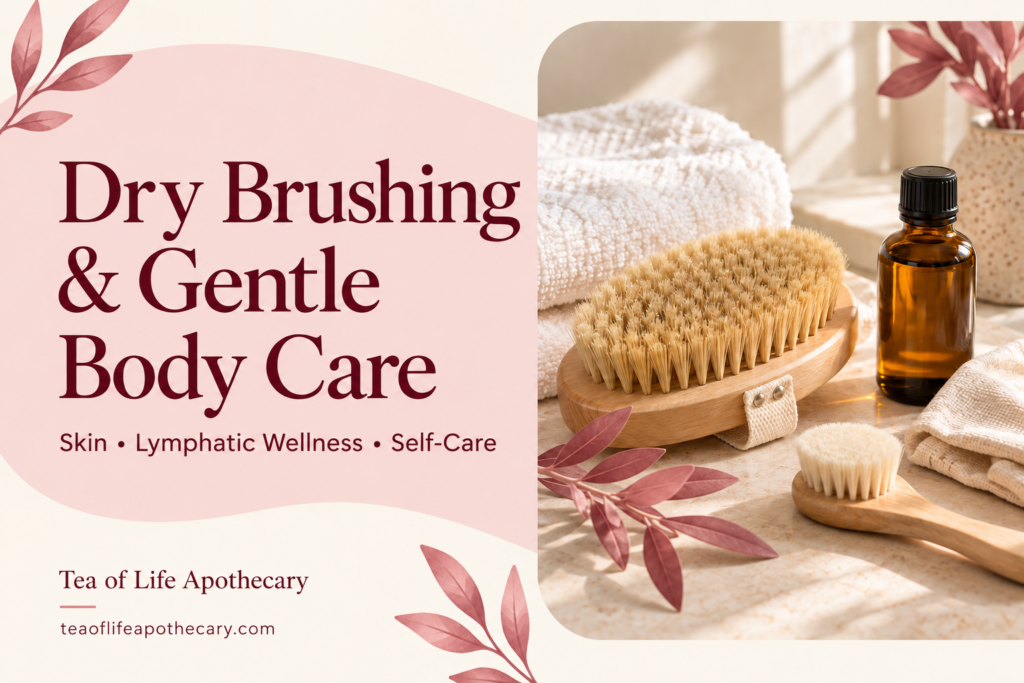
For the body, choose a clean, soft-bristled brush. Begin with a few light strokes over a small area to see how your skin responds. Traditional routines often use upward strokes on the limbs and gentle circular movements over the torso. Treat this as a skin-care practice rather than a prescribed lymphatic treatment. Start occasionally and adjust to your tolerance instead of assuming daily brushing is necessary.
Avoid broken skin, sunburn, rashes, and eczema or psoriasis flares. Keep the brush clean and allow it to dry completely between uses. If you have reduced sensation, fragile skin, or a diagnosed lymphatic condition, ask your clinician which skin-care methods are appropriate.
Can you dry brush your face?
Facial skin needs particular care. A body brush is too abrasive for the face. If you choose facial brushing, use a separate, very soft facial brush with feather-light contact, avoiding the eyelids and irritated areas. Dry brushing may be unsuitable for sensitive skin, rosacea, inflamed acne, or skin already irritated by exfoliating products. A soft washcloth or a simple cleanse-and-moisturize routine may suit you better.
Think of facial care as an opportunity for a gentle pause. It should leave your skin comfortable.
Nourishing oils and the skin barrier
After bathing, pat your skin gently and apply a moisturizer while it is still slightly damp. Moisturizing helps retain water, improving softness and supporting the skin barrier. A tolerated oil can be an additional layer to help seal in moisture; oil alone does not provide the water that dehydrated skin needs.
Almond, kukui nut, and castor oils are options some people enjoy. Choose according to your skin’s response, texture preference, and allergy history rather than assuming one oil is best for everyone. Castor oil is particularly thick, and its fatty acids can help retain moisture, but it can also cause staining of the clothes and is very slow to absorb.
Patch-test a small amount before broader use. If you have a nut allergy, check almond and kukui products with your clinician. Fragrance-free products are often a useful starting point for reactive skin.
The lymphatic system: fluid balance, immune health, and waste transport
The lymphatic system collects excess fluid from tissues and returns it to the bloodstream. It also transports certain dietary fats and plays an important role in immune defense. Lymph nodes help filter the fluid and coordinate immune responses.
Movement belongs in a routine that supports lymphatic health. Walking and other comfortable activity are accessible starting points; regularly interrupting long periods of sitting can also help circulation. Hydration matters, but follow any fluid restrictions prescribed for heart or kidney conditions.
Dry brushing is often described in alternative wellness as a lymphatic or “detox” practice. Its exfoliating benefits are clearer than its internal effects: but there is evidence that brushing supports lymphatic function.
For someone with diagnosed lymphedema, care may involve individualized exercise, compression, skin care, or specialized manual lymphatic drainage. A brush is not interchangeable with that treatment.
What does “detox support” mean here?
A practical holistic approach focuses on supporting the body’s normal functions: adequate nutrition, suitable hydration, movement, sleep, and appropriate care for digestive or medical concerns. The liver processes many substances, and the kidneys help eliminate waste. Surface exfoliation does not draw internal toxins through the skin.
You can enjoy a comforting ritual without using a detox explanation for every effect. Softer skin, a pleasant sense of warmth, and time set aside for rest are worthwhile experiences in their own right.
Cellulite, hormones, and tissue changes
Cellulite commonly appears on the thighs, buttocks, hips, and abdomen. The dimples form through the relationship between fat beneath the skin and the connective bands that tether the skin downward. Genetics, hormones, aging, and skin elasticity influence its appearance. People of many body sizes—including lean, active people—have cellulite.
Consistent gentle exfoliation and moisturizing may make the skin’s surface feel smoother. Some people perceive softer-looking dimples after brushing, but that may reflect a temporary change in skin appearance.
Fluid retention can change how tissues look and feel, but cellulite by itself does not establish poor lymphatic drainage or a buildup of “systemic debris.” Persistent swelling, tenderness, easy bruising, or progressive tissue changes warrant a separate assessment.
Stress, cortisol, and “fight or flight”
Holistic care also asks: How much stress is this person carrying? Are they sleeping? Do they have opportunities to rest?
Chronic stress can affect appetite, sleep, activity, and weight regulation. Cortisol participates in the body’s stress response, but stress does not automatically mean that everyone has persistently high cortisol.
The state of fight-or-flight may allow fluid into the legs while slowing drainage.
A slower evening routine can be valuable. Comfortable touch, quiet surroundings, and unhurried breathing may help you feel settled and make space for rest. Hormonal concerns deserve individualized assessment rather than a conclusion based on cellulite or weight alone.
Where castor oil packs fit
Castor oil packs have a long history in alternative wellness. Some people enjoy an abdominal pack as part of a comforting routine. Applied to intact skin, castor oil may help retain moisture; a cloth covering can also aid in the reduction of abdominal discomfort, bloating, constipation, and other abdominal discomforts.
A pack on the thighs or arms may offer local skin-conditioning benefits if tolerated. Similarly, placing a pack over the thyroid can be useful in supporting thyroid function or hormone balance. ALL thyroid symptoms, lumps, or neck swelling deserve medical assessment. Avoid tight wraps around the neck and discuss any thyroid-area application with your clinician.
Could a vibration plate provide additional support?
Vibration treatments are being explored for circulation and tissue-related benefits. A small pilot study involving older adults who spent prolonged periods seated suggested that a particular vibration intervention might help prevent worsening leg edema. A separate study reported changes in skin microcirculation and cellulite appearance after repeated vibration treatments.
If your clinician considers vibration appropriate, follow the manufacturer’s instructions and any individualized guidance about position, intensity, and duration. Stop if it causes pain, dizziness, or worsening symptoms. Comfortable walking or gentle ankle movements may be more accessible options for many people.
Persistent leg and ankle swelling deserves evaluation
Swelling can have several causes, including prolonged sitting, medications, venous problems, and heart, kidney, or lymphatic conditions. Your primary care clinician can help determine the cause and the most appropriate care.
Seek prompt medical attention for sudden or unexplained swelling in one leg, particularly with pain, redness, or warmth. Swelling accompanied by chest pain or shortness of breath is an emergency—call 911. Avoid attempting to brush or vibrate away unexplained swelling.
A gentle routine to begin with
- Check your skin. Skip irritated areas and choose a soft, clean brush.
- Brush lightly before bathing. A few comfortable strokes are enough; facial brushing is optional and requires an extra-soft tool.
- Rinse with comfortably warm water. Use gentle cleansing rather than another exfoliation step.
- Moisturize damp skin. Add a small amount of a tolerated oil if you enjoy it.
- Make room for movement and rest. Choose activity that fits your abilities and an evening routine that helps you settle.
- Add other tools thoughtfully. Castor oil packs can be a skin-care ritual; vibration requires suitable equipment and guidance when swelling or medical conditions are present.
At Tea of Life Apothecary, our goal is to help you understand your body and choose supportive practices with care. A routine should fit your skin, your health, and your capacity. Start gently, pay attention to your response, and bring persistent symptoms to a qualified clinician.
Visit us at 19 West 2nd St., Chillicothe, Ohio, or explore teaoflifeapothecary.com.
This article provides general education. Individual skin conditions, swelling, and thyroid concerns require individualized care.