
When most people think about their liver, they picture alcohol or maybe cholesterol. Some know it has something to do with detoxification, but beyond that, it’s an organ that rarely gets much attention until something starts going wrong.
The truth is, your liver is one of the hardest-working organs in your entire body.
Every minute of every day it filters your blood, processes medications, metabolizes hormones, produces bile for digestion, stores vitamins and minerals, helps regulate blood sugar, supports healthy cholesterol levels, and neutralizes substances your body no longer needs. It performs hundreds of different functions without ever taking a break. Even while you’re sleeping, your liver continues working quietly behind the scenes to keep the rest of your body functioning properly.
Unfortunately, modern life doesn’t make its job very easy.
We live in a world filled with processed foods, environmental chemicals, plastics, pesticides, medications, alcohol, chronic stress, and poor sleep. Every day our liver is asked to process far more than it was ever designed to handle. While our bodies were wonderfully created with remarkable detoxification systems, there comes a point where we need to start supporting the organs that faithfully support us.
When I talk with clients about liver health, however, I believe there’s another piece of the conversation that often gets overlooked.
For thousands of years, Traditional Chinese Medicine has associated the liver with certain emotions—particularly anger, frustration, bitterness, resentment, and unresolved emotional stress. While modern medicine doesn’t describe the liver in these exact terms, it does recognize something equally important: chronic emotional stress changes our physiology.
When we remain in a constant state of stress, our bodies continue releasing cortisol and adrenaline. Sleep becomes disrupted. Blood sugar becomes more difficult to regulate. Inflammation increases. Digestion slows. Our bodies remain in survival mode rather than repair mode. Whether you approach this from the perspective of traditional medicine, modern physiology, or simply your own personal experience, it’s difficult to ignore the connection between emotional health and physical health.
Sometimes the heaviest thing your liver is carrying isn’t something you ate.
Sometimes it’s something you’ve been holding onto for years.
Old hurts.
Unforgiveness.
Bitterness.
The constant pressure to keep everyone else happy.
The stress of living in survival mode for so long that you no longer remember what peace actually feels like.
I don’t believe healing is only about taking another supplement. I believe it’s also about creating an environment where the body finally feels safe enough to heal.
That is one reason I encourage people to think beyond simply “detoxing.” Supporting the liver isn’t just about drinking more water or avoiding fried foods. It’s about supporting the whole person.
One of the simplest places to begin is by improving your sleep.
Although your liver works around the clock, many of the body’s most important repair and metabolic processes occur while we sleep. If we’re constantly staying up late, eating heavy meals just before bed, scrolling our phones until midnight, or waking repeatedly throughout the night, we’re asking our bodies to digest when they should be repairing.
One of the easiest habits I recommend is to stop eating at least three hours before bedtime. That means no late-night snacks, no bowl of cereal, no handful of popcorn while watching television. Giving your digestive system time to finish its work before sleep allows your body to focus more of its energy on overnight restoration instead of digestion.
I also believe that consistency is far more powerful than intensity.
People often search for a three-day cleanse or a miracle detox, but our bodies rarely work that way. Lasting change usually comes from simple habits practiced consistently over time.
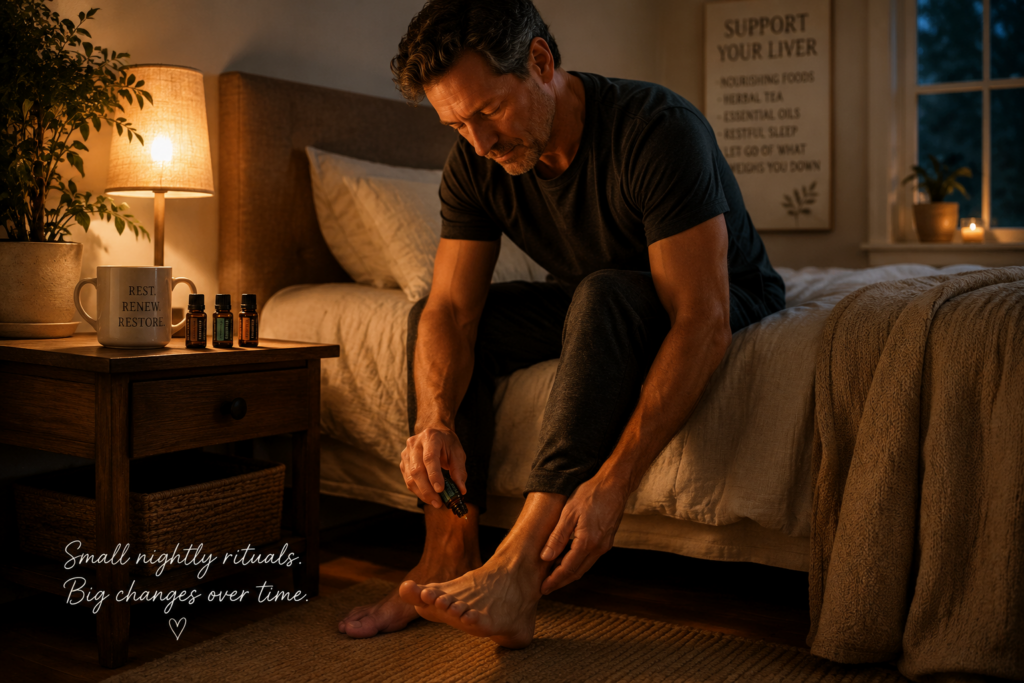
One routine I personally enjoy combines herbal support with essential oils as part of an evening wind-down ritual. Before bed, I apply three drops each of cedarwood, grapefruit, and cypress essential oils over the area of the liver and gently massage them into the skin. I also place three drops on the bottom of each foot. At the same time, I drink our Dandelion & Milk Thistle Tea or take our liver-support tincture once or twice daily as part of my overall wellness routine. I’ve also found that applying castor oil packs to the abdomen or liver area for 2–4 hours, three to four times per week, can be a helpful addition for some people.
Can I promise this routine will create the same experience for everyone? Absolutely not. Every person’s body, health history, lifestyle, and genetics are different. But I can tell you that over the course of about six to eight weeks, I personally noticed changes in how I felt physically and emotionally. Whether that was from the herbs, the nightly routine itself, improved sleep, stress reduction, or all of these things working together, I cannot say with certainty. What I do know is that consistency mattered.
Sometimes healing isn’t about finding the next miracle product.
Sometimes it’s about showing up for your body every single day.
It’s choosing nourishing foods more often than processed ones. Drinking enough water. Getting to bed on time. Supporting the organs that quietly care for you every day. Learning to let go of anger that has been weighing on your heart for years. Creating moments of stillness instead of constant stimulation.
Your liver has spent your entire life taking care of you.
Perhaps it’s time we start returning the favor.
If you find yourself struggling with how to process or release chronic anger, this is something I can help you work through in one-on-one coaching sessions. You can also begin exploring your own path toward emotional healing.
A few books I often recommend for those wanting to go deeper include Feelings Buried Alive Never Die by Karol Truman, A More Excellent Way by Dr. Henry Wright, When the Body Says No by Dr. Gabor Maté, and The Body Keeps the Score by Dr. Bessel van der Kolk.
As always, this article is intended for educational purposes only and should not be considered medical advice. If you have liver disease, take prescription medications, are pregnant, or have other medical conditions, speak with your healthcare provider before beginning any new herbal or wellness routine.