
Why Your Level Deserves a Closer Look
For women in perimenopause and postmenopause—and for the men in our lives, too.
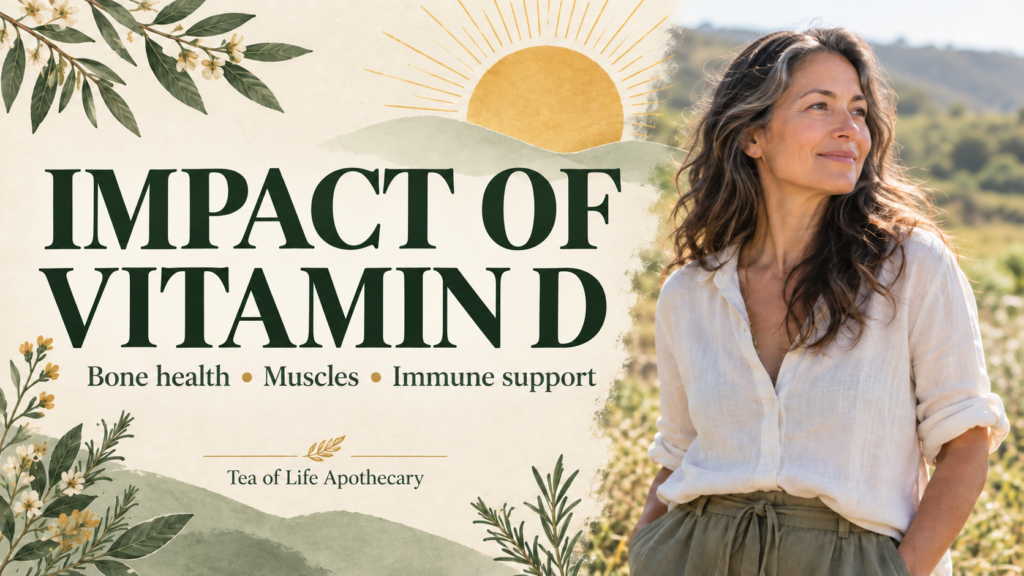
Are you dealing with aches, weakness, frequent illness, or hair shedding and wondering if your body is missing something? Vitamin D may be one piece of the picture. It helps us absorb calcium, maintain bone and muscle health, and support normal immune function. Its work reaches into many systems of the body, which is why I don’t think it should be dismissed as “just a bone vitamin.”
Why menopause makes this conversation more important
As estrogen declines through the menopause transition, bone loss can accelerate. That makes adequate vitamin D, dietary calcium, strength and weight-bearing activity, and an individualized bone-health plan especially important. Men need vitamin D too, particularly as they age or face risk factors for low bone density. Vitamin D cannot reverse every symptom of menopause or autoimmune disease, but a deficiency requires attention.
The typical vitamin D range for the 25-hydroxyvitamin D [25(OH)D] blood test is 30–100 ng/mL. Conventional medicine often doesnt adress a level that is in the lower range, labeling it as “normal”. But, many people experience symptoms of “low vitamin D” if their level is chronically under 65 ng/mL. A lab result marked “normal” should not end the conversation when someone still feels unwell.
Could low vitamin D be contributing to how you feel?
A significant deficiency (or chronically LOW level) can cause bone pain, muscle pain, and muscle weakness. Some people also report fatigue, diffuse aches, or frequent infections. Hair shedding and joint pain can occur alongside low vitamin D, but they have many other possible causes, including thyroid changes, low iron, inflammatory disease, and the menopause transition itself.
If you live with an autoimmune or inflammatory condition, don’t assume that every flare is “just your condition.” It is reasonable to review your nutrition and supplementation status and ask whether vitamin D status is relevant to your care. Correcting a deficiency supports health, and long-term outcomes.
What does a vitamin D number really mean?
The blood test used to assess vitamin D status is 25-hydroxyvitamin D, often written as 25(OH)D. Results in the U.S. are usually reported in ng/mL.
You may see a lab reference range of 30–100 ng/mL. A reference range does not mean that everyone experiences symptoms at the same level. NIH guidance considers 30 ng/mL or higher adequate for most people however, many people with chronic levels under 65 ng/mL may be associated with symptoms. Professional recommendations have differed over time, and an optimal target for preventing disease has not been established for otherwise healthy adults.
I hear from people who feel unwell even when their result is technically “in range.” Their experience deserves to be taken seriously. It is important to stress that 65 ng/mL is not an established threshold below which most people become symptomatic.
Why sunlight may not be enough
Our skin can make vitamin D when exposed to UVB light, but the amount varies with season, latitude, time outdoors, skin pigmentation, age, clothing, and other factors. Here in Ohio, a person who spends most daylight hours indoors may have less opportunity for UVB exposure during parts of the year. Food sources are limited, too: fatty fish, egg yolks, and fortified foods are examples, but many people find it difficult to meet their needs through food alone.
Sunscreen reduces vitamin D production in the skin under controlled conditions. I understand that people make different choices about sun exposure. The key point is that sunburn is skin damage, not a requirement for making vitamin D. There is no reliable “safe number of minutes” that works for everyone however it is suggested that 10-15 minutes of direct sunlight on the skin can be beneficial.
Chronic sunglass usage inhibits the eyes from signaling the skin to protect itself, making the risk of sunburn more likely. Vitamin D production occurs in the skin, but receptors in the eyes assist in the process. In bright, direct sunlight, it is not recommend going without UV-protective sunglasses for periods longer than10–15 minutes. However, I would also encourage “sun gazing” – it is performed by turning your face directly to the sun with eyes CLOSED and allowing the sun’s rays to penetrate through your closed eyelids for 5-7 minutes. When done first thing of the morning this not only impacts vitamin D synthesis, it also strongly impacts the circadian rhythm.
Do you need D3, K2, and magnesium together?
Vitamin D works within a larger nutrient network. Magnesium participates in vitamin D metabolism and matters for muscle, nerve, and bone health. Vitamin K helps activate proteins involved in bone health. If your magnesium intake is low, or your diet lacks vitamin K, those gaps may be worth addressing. When these supplements are taken together, it has been shown to improve vitamin D absorption for everyone. Please note: If you take warfarin or another vitamin-K-sensitive medicine, discuss K2 with your prescriber before adding it.
Also, Vitamin D is fat-soluble. Taking a supplement with a meal that contains healthy fat can help absorption. The right dose depends on your intake, medical history, medications, and, when indicated, blood work. More is not always better: excessive vitamin D can raise calcium levels and contribute to kidney stones and other harm.
A practical next step
If you’re in perimenopause or post menopause and dealing with persistent aches, weakness, bone loss concerns, hot flashes, brain fog, or chronic illness, bring those symptoms to a qualified clinician. Ask whether a 25(OH)D test makes sense for you.
My goal is not for you to chase a magic number. It is to encourage you to listen to what your body is telling you, identify a real deficiency when present, and give your body the support it actually needs.
Tea of Life Apothecary offers herbal and wellness education. This article is educational and does not diagnose a deficiency or replace individualized medical care.
Sources
- NIH Office of Dietary Supplements, Vitamin D: Health Professional Fact Sheet.
- NIH Office of Dietary Supplements, Vitamin D: Consumer Fact Sheet.
- Endocrine Society, Vitamin D for the Prevention of Disease guideline (2024).
- NIH Office of Dietary Supplements, Magnesium and Vitamin K fact sheets.
- American Academy of Dermatology, Sunscreen FAQs.
- The Menopause Society, Postmenopausal Osteoporosis.