
Modern life is fast-paced, leaving our bodies prone to digestive discomfort, restless nights, and chronic stress. While medications and supplements are available, many people are turning to herbal tea as a natural, gentle, and time-tested approach to supporting overall well-being.
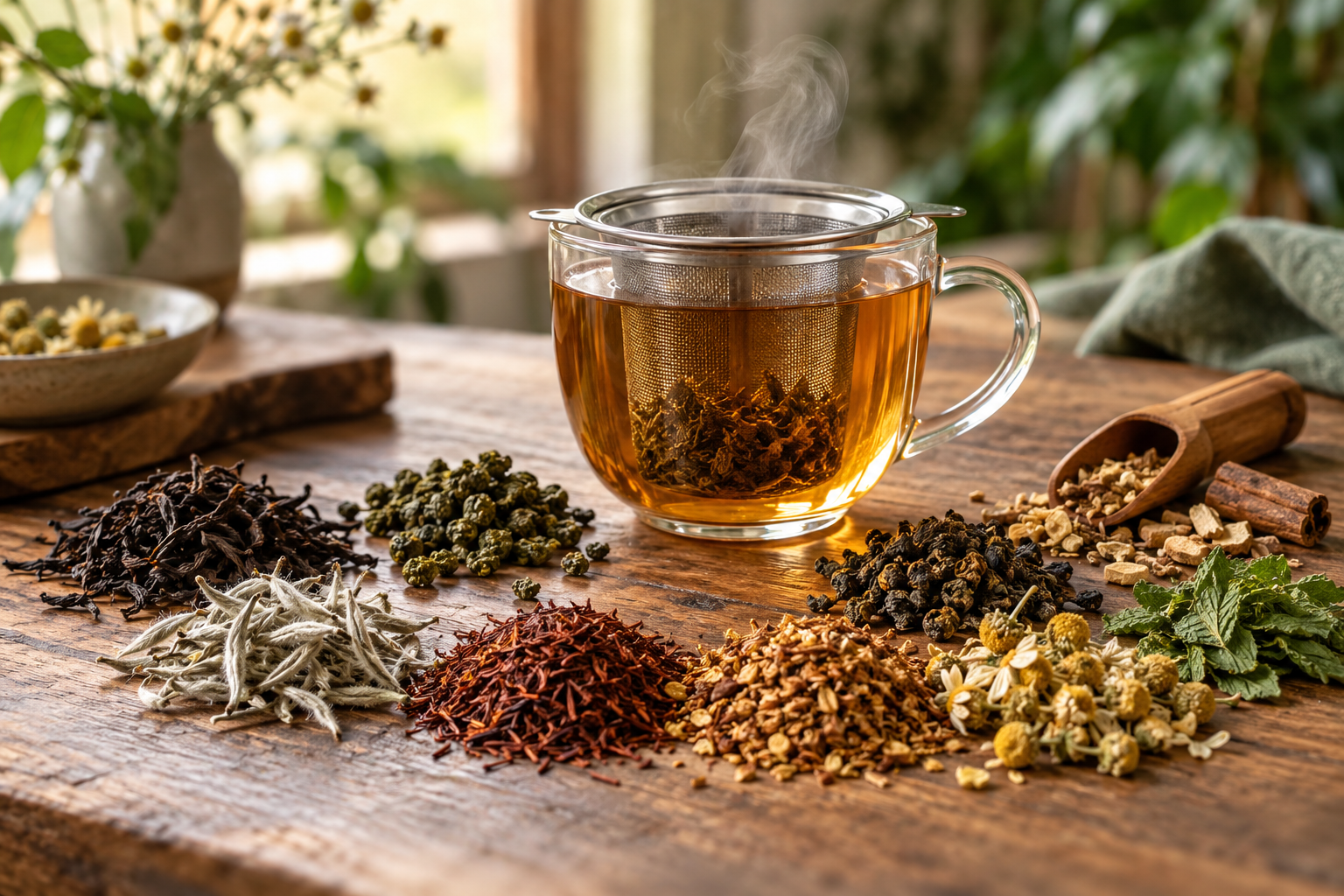
Herbal teas do more than provide warmth and flavor; they work in harmony with the body. From soothing the digestive system to calming the mind and enhancing sleep quality, the right herbal tea can bring tangible benefits to your daily routine. Herbal teas are naturally caffeine-free infusions made from leaves, roots, flowers, seeds, or spices. Unlike traditional teas, they are often brewed for their therapeutic effects rather than their stimulating properties.
People are increasingly turning to herbal teas because they are simple to incorporate into daily life, soothing, and gentle on the body. These teas are packed with beneficial plant compounds that help promote overall wellness and address the root causes of discomfort rather than merely masking symptoms. In this guide, we explore the top herbal teas for digestion, sleep, and stress relief, and how to select the best one for your needs.
Best Herbal Teas for Digestion Support
Digestive discomfort, including bloating, gas, and slow digestion, is often triggered by poor eating habits, stress, or inflammation. Herbal teas can support digestive health by relaxing gastrointestinal muscles, stimulating digestive enzymes, and easing discomfort naturally.
Peppermint Tea
Peppermint Tea is a classic choice for digestive relief, known for its ability to relax the digestive tract muscles and support smooth digestion.
Benefits include:
- Reduces bloating and gas
- Eases stomach cramps
- Supports digestion after meals
Peppermint tea is particularly effective after heavy or rich meals.
Ginger Tea
Ginger Tea has been used for centuries to aid digestion. Its natural compounds stimulate digestive enzymes and bile production, improving food breakdown and nutrient absorption.
Why it works:
- Reduces nausea and indigestion
- Supports gut motility
- Provides anti-inflammatory benefits for the digestive system
Ginger tea is ideal for those with sensitive stomachs or morning digestive sluggishness.
Fennel Tea
Fennel seeds are highly regarded for their carminative properties, which help release trapped gas and ease bloating.
Key benefits:
- Relieves abdominal pressure and bloating
- Supports smooth digestion
- Soothes intestinal discomfort
Fennel tea is mild enough to be consumed daily for ongoing digestive support.
Top Herbal Teas for Better Sleep
Poor sleep is often linked to an overactive nervous system and mental tension. Herbal teas for sleep promote relaxation, helping the body naturally prepare for rest without dependence or grogginess.
Chamomile Tea
Chamomile is one of the most popular natural sleep aids, containing compounds like apigenin that gently induce relaxation and drowsiness.
Sleep benefits include:
- Helps you fall asleep faster
- Improves overall sleep quality
- Reduces nighttime restlessness
Chamomile tea works best when consumed 30–60 minutes before bedtime.
Valerian Root Tea
Valerian root is a potent herb traditionally used for insomnia and nervous tension. It promotes deep, restorative sleep by calming the nervous system.
Why people choose valerian:
- Supports deeper sleep cycles
- Calms racing thoughts
- Reduces nighttime awakenings
Valerian tea is particularly beneficial for those with chronic sleep difficulties.
Passion Flower Tea
Passionflower increases GABA levels in the brain, which slows down overactive neural activity and helps the mind unwind.
Benefits for sleep:
- Reduces pre-bedtime anxiety
- Improves sleep duration
- Eases stress-related insomnia
This tea is ideal for individuals who struggle to “switch off” at night.
Best Herbal Teas for Stress Relief and Relaxation
Chronic stress affects both mental and physical health, and finding natural ways to manage it is essential. Herbal teas can help regulate stress hormones and support emotional balance in a gentle, sustainable way.
Lemon Balm Tea
Lemon balm is a mild yet effective herb for stress relief, offering both calming and uplifting effects on the mind.
Stress-relief benefits:
- Reduces anxiety and nervous tension
- Improves focus and mood
- Supports emotional balance
It is perfect for daytime consumption without causing drowsiness.
Lavender Tea
Lavender is widely recognized for its calming aroma, but it also works effectively as a brewed tea to ease tension.
Why it’s effective:
- Calms the nervous system
- Reduces tension headaches
- Promotes overall emotional relaxation
Lavender tea is ideal for unwinding after a busy or stressful day.
Ashwagandha Tea
Ashwagandha is an adaptogenic herb that strengthens the body’s resilience to stress by supporting hormonal balance.
Key benefits:
- Balances cortisol and other stress hormones
- Enhances resilience to daily pressure
- Supports calm and focused energy levels
Consistency is key. Ashwagandha tea works best when used regularly.
How to Choose the Right Herbal Tea for Your Needs?
Selecting the most suitable herbal tea depends on your main health concern. Understanding the benefits of each type ensures you can address your specific needs naturally.
Suggestions based on goals:
- Digestion support: Peppermint, ginger, fennel
- Sleep improvement: Chamomile, valerian, passionflower
- Stress relief: Lemon balm, lavender, ashwagandha
You can also rotate teas throughout the day, digestive teas after meals, and calming teas in the evening to maximize benefits.
Final Thoughts
At Tea of Life Apothecary, every cup of herbal tea is more than just a drink; it’s an intentional step toward nurturing your body, mind, and spirit. Made with care and rooted in holistic wellness, their artisanal blends support digestion, promote restful sleep, and help ease stress naturally, blending ancient herbal wisdom with modern wellness insights.
Whether you’re enjoying a calming chamomile before bed, a digestive-supporting blend after meals, or a stress-relieving infusion during a hectic day, these teas are designed to bring balance, comfort, and long-term wellness. With mindful preparation and regular use, a simple cup of tea can become a cherished daily ritual of self-care and holistic nourishment.