
A whole body look at parasites, yeast, and mold. The preparation that matters.
By Angel Altman, Tea of Life Apothecary
People come into the apothecary asking about parasite cleanses all the time. Often, the conversation begins with something they saw on TikTok, Facebook, or Instagram: a list of symptoms, a dramatic bathroom photograph, or a promise that one cleanse will finally explain why they feel so bad.
I understand the appeal. When you have been dealing with uncomfortable digestion, fatigue, or that feeling that something is off, you want answers. You want someone to consider the bigger picture.
There is room for that bigger picture. Ayurveda, traditional Chinese medicine, and naturopathic traditions all offer ways of thinking about digestion, nourishment, elimination, and the environment in which illness develops. Those perspectives deserve thoughtful attention. But exploring possibilities works best when we become our own health investigators. Asking questions like: Which organism might be involved? Where does it live? Could yeast, environmental exposure, or another digestive problem be contributing? Is the product you are considering appropriate for your body?
A thoughtful approach begins with understanding what you are addressing and supporting the person who is experiencing it.
Parasites are not always worms you can see
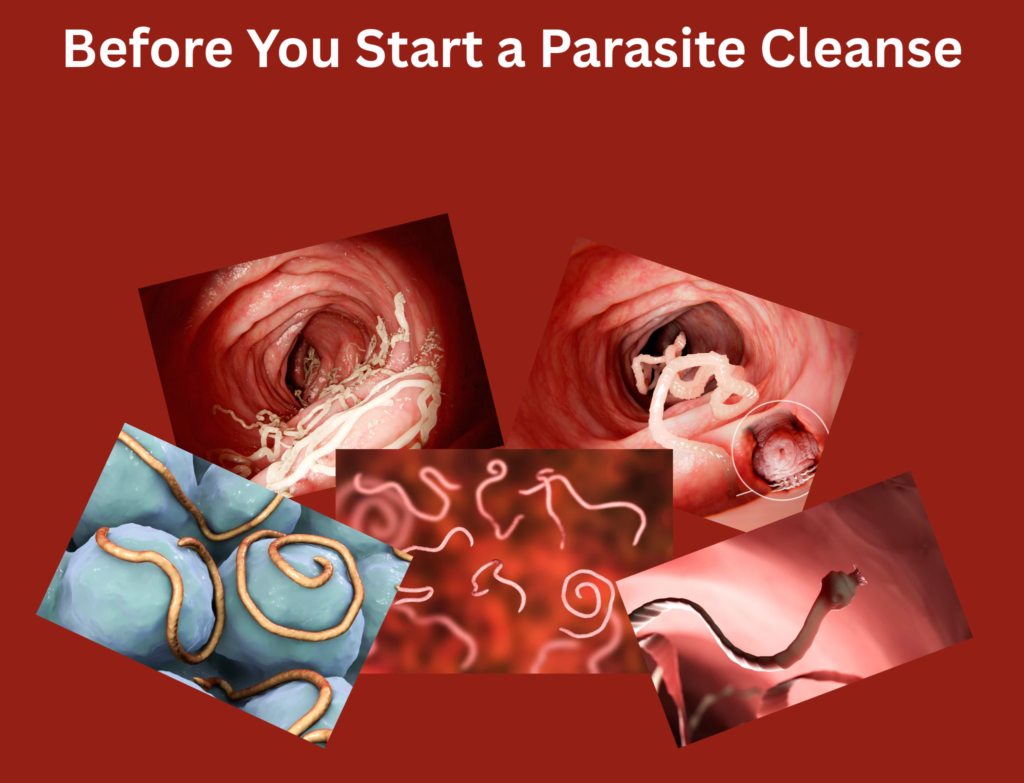
The word “parasite” describes many different organisms. Some are worms, called helminths. Others are microscopic organisms called protozoa. Their size, location, and life cycles vary enormously. Some inhabit the intestinal tract. Others involve blood, tissues, or organs. Certain infections can be investigated through stool, others through blood, and some through urine or other samples. For example, particular Schistosoma species live in blood vessels and release eggs that can be detected in urine or stool. That does not mean every parasite appears in every body fluid.
You do not have to see a worm to have a parasitic infection. And seeing something stringy in the toilet does not prove that you have one.
Many parasites and their eggs are microscopic. Some infections involve tissues rather than the bowel. Undigested plant fibers and mucus can also be mistaken for worms. Appearance alone cannot reliably establish what an object is or whether a treatment worked.
There is no reliable universal percentage for how often a “cleanse” produces visible parasites. What matters is that visible material is an unreliable measure of either infection or recovery. A photograph cannot identify every organism, and a lack of visible worms cannot rule infection out.
What traditional healing systems add to the conversation
These traditions have distinct histories. Their concepts should not be treated as interchangeable names for the same thing.
Ayurveda considers digestion and the conditions surrounding illness
Ayurvedic literature discusses krimi, a traditional category encompassing descriptions of worms and other organisms that does not fit perfectly onto modern microbiology. An Ayurvedic assessment may consider agni, or digestive function, along with appetite, food habits, elimination, and the person’s overall condition. The concept of ama is often translated as poorly processed or incompletely digested material.
Herbs such as vidanga have a history of use in addressing parasitic infections. Along with being an antiparasitic it possesses many other health benefits. It is a powerful detoxifier, specifically for the blood, lymphatic system and colon.
Traditional Chinese medicine considers the person’s pattern
Traditional Chinese medicine includes a category of worm expelling herbs. Shi jun zi, also called Quisqualis fruit or Rangooncreeper fruit, is one historical example. Practitioners also consider the person’s broader pattern, including appetite, digestive strength, and bowel changes. This approach helps explain why two people with similar digestive complaints may receive different recommendations.
Naturopathic care looks for contributing conditions
Naturopathic principles emphasize identifying causes, supporting the body’s capacity to recover, and considering the whole person. Nutrition, botanical medicine, hygiene, environmental conditions, emotional state, and appropriate diagnostic testing can all be part of that assessment. This encompasses conditions surrounding health: nutrition, microbial balance, bowel function, stress, sleep, and various exposures. It is important that we point out not every infection results from a poorly maintained body. People can acquire parasites despite eating well and taking good care of themselves. Infection is not a personal failure.
Preparation before an optional cleanse
Before adding several strong herbs or supplements, consider your foundation. Are you eating enough? Are you staying hydrated? Are you constipated? Are you already taking products that affect your liver, kidneys, blood pressure, or medications?
For my products, I recommend a 4–6-week preparation period before moving into a more targeted herbal program. My purpose is to help you establish consistency, focus on liver and digestive support, and introduce a gentle, low level herbal “gut prep” routine selected for your needs. This is my herbal recommendation and the intention behind the preparation phase. During these weeks, we work on taking an appropriate product consistently, noticing how your digestion responds, and building habits around food, hydration, bowel comfort, and sleep. Preparation is an active part of learning how to care for your body. It also gives us time to review ingredients, medications, and tolerability before adding anything else.
There is no established rule that everyone must prepare their liver for 4–6 weeks before parasite treatment, and a suspected or confirmed infection should not be left untreated while someone completes a cleanse preparation schedule. However, most people i encounter are simply looking for a general parasite detox “just in case” they have an infection. Your liver is already processing substances every day. Your kidneys and digestive tract also handle waste removal. “Supporting detoxification” is intended to support for normal function, it is not a promise to open blocked pathways or flush every toxin out of the body.
A gentle foundation can include:
- Regular meals with adequate protein and enough total food.
- Vegetables and other fiber containing foods that your digestion tolerates.
- Appropriate hydration, particularly if stools are loose.
- Addressing persistent constipation rather than repeatedly forcing bowel movements.
- Reducing alcohol and excessive added sugar.
- Consistent sleep and manageable daily movement.
- Reviewing herbs and supplements before combining them.
The goal is a steadier, better nourished person. Severe restriction, repeated purging, and dehydration work against that goal.
Where liver herbs fit
Dandelion and milk thistle have long histories in herbal practice, particularly in discussions of digestion and liver support. At Tea of Life Apothecary, options we can discuss include our Cilantro & Moringa Tincture and Dandelion & Milk Thistle Herbal Tea. Their place in a plan depends on the person using it. They are not proven prerequisites for treating parasites, and cilantro is not being presented as a singlehanded method of removing heavy metals from the body. These are simply to support liver function and help promote optimal function.
In my blends that contain senna or licorice, I use small amounts with the intention of minimizing their impact during ongoing use. They are parts of a broader formula, rather than the entire preparation. The actual amount per serving, how the herbs are prepared, how often the product is used, and the person’s health history still matter.
Senna is a stimulant laxative. European guidance for standardized senna medicines recommends short term use. Licorice can affect blood pressure and potassium, particularly in compromised people. For a longer preparation phase, we review the actual formulation and make adjustments if needed. My 4–6-week preparation recommendation should not be read as an instruction for everyone to drink a senna containing tea daily for that entire period.
Parasite life cycles explain why follow through matters
There is no single parasite life cycle. Some worms develop through egg, larval, and adult stages. Some require an animal host or an environmental stage. Protozoa may have active and resistant forms, such as trophozoites and cysts, rather than eggs and adult worms. That variation affects timing, testing, reinfection prevention, and treatment choice. An intervention active against one stage may not affect another. A person may also be exposed again through contaminated hands, surfaces, food, or water.
Pinworm provides a clear example: the standard treatment schedule includes a second dose two weeks after the first because the medicines kill worms but do not kill the eggs. Household hygiene helps prevent another cycle of infection. This specific example should not be generalized to every parasite or herbal product.
What about 60–120 days? In the holistic and herbal education channels I follow, this is a commonly recommended overall program length. I mention it because I want people to understand that a thoughtful plan involves consistency and follow through over time, rather than expecting one weekend of cleansing to resolve every concern. This describes recommendations circulating within those channels, not a research established treatment duration for every parasite.
An individualized program over that time may include preparation, selected periods of targeted herbal support, nutrition work, reassessment, and follow up testing when appropriate. It does not mean taking every product every day for 60–120 days. The organism, test findings, formula, tolerability, and response determine the actual plan. Some infections need shorter treatment courses; others require different or extended care. A life cycle does not establish that someone should take the same antiparasitic herbs continuously for two to four months. Wormwood containing products, in particular, should not be assumed safe for prolonged use. Consistency means following an appropriate plan and reassessing it, rather than continuing a product indefinitely.
Pets can be part of the exposure picture
Some parasites can pass between animals and people. Risk depends on the organism, geography, veterinary prevention, sanitation, and the route of exposure. I have encountered an article offering a rough estimate—or “guesstimate”—of 92% of pet owners acquiring parasites from their pets. That should not be used to estimate your personal risk or to imply that nearly every pet owner is infected. The useful point is that animal related exposure is possible and deserves sensible prevention.
The practical response is prevention: appropriate veterinary care, prompt waste pickup, handwashing, and keeping food preparation areas clean. Having a pet does not mean you need an automatic cleanse.
You can be exposed without owning a pet
Your flower beds and vegetable garden are part of a shared outdoor environment. Neighborhood animals and wildlife—including squirrels, rabbits, deer, raccoons, and outdoor cats—may leave droppings there. Whether those droppings pose a human parasite risk depends on the species and organism; It is important to mention, NOT ALL animal parasites infect people.
The clearest examples include Toxocara eggs in soil contaminated by infected dogs or cats and raccoon roundworm eggs in areas contaminated with raccoon feces. Infection can occur when a person accidentally swallows infective eggs from contaminated hands or objects. Simply touching dirt does not automatically cause infection.
Wear gardening gloves, wash hands before eating, clean produce, and keep children away from animal droppings. Suspected raccoon latrines need particular care and appropriate cleanup guidance.
Social media can turn overlapping symptoms into a false diagnosis
An online checklist may connect bloating, sugar cravings, fatigue, headaches, skin irritation, poor sleep, or trouble concentrating to parasites. Those symptoms can be real and disruptive. They do not identify one cause. A whole body approach should widen the questions we ask. It should leave room to consider food reactions, bowel function, microbial changes, nutritional status, sleep, environmental exposures, and other health conditions.
The same care applies when a cleanse makes you feel worse. Nausea, diarrhea, headaches, weakness, or dizziness can reflect adverse effects, dehydration, or another problem. They do not prove that parasites are dying or that the product is working. Significant worsening deserves reassessment rather than pressure to push through.
Yeast and mold can overlap with the conversation
Yeasts and molds are fungi. In everyday clinical use, fungal conditions are discussed separately from parasitic infections. I add them here because fungi can behave parasitically in the broader biological sense, but calling every yeast or mold problem a “parasite” obscures important differences.
Possible overlap comes from what they can do in a susceptible person: irritate tissues, provoke immune responses, alter local microbial conditions, or produce metabolites. That can lead to symptoms that overlap with those attributed to parasites online. The mechanisms differ. Intestinal infection, small intestinal fungal overgrowth, mold allergy, environmental exposure, and invasive fungal infection are different and very serious problems. They require different questions and cannot all be addressed with the same cleanse.
Understanding yeast overgrowth
Candida can be present without causing disease. Its detection in stool does not automatically establish harmful overgrowth, explain brain fog, or show that it has spread throughout the body. Our body is designed to have a certain amount of yeast and specific strains in the microbiome.
Small intestinal fungal overgrowth, often called SIFO, is a recognized area of investigation. In a specialist study of 150 people with persistent unexplained digestive complaints, researchers found fungal and/or bacterial overgrowth in the participants using small bowel testing.
When considering digestive fungal or bacterial overgrowth, practitioners may explore factors such as gut movement, medication history, nutritional status, and other health conditions. Bloating or discomfort alone cannot distinguish yeast from bacteria or parasites.
What about the brain
Intestinal microbes interact with immune, metabolic, and nervous system signaling. That makes the gut–brain relationship an important topic. Heavy candida colonization may cause increased anxiety, attention/focus problems, depression, or personality changes. Poor sleep, persistent digestive discomfort, and inadequate nutrition can also affect how a person feels and functions. Neurological symptoms deserve their own assessment, as yeast and mold excess can contribute to neurological issues.
There is one particularly striking condition in which microbial fermentation can directly affect behavior: auto-brewery syndrome.
Auto brewery syndrome can produce real intoxication
Auto-brewery syndrome, also called gut fermentation syndrome, is a condition on the rise in which microbes ferment carbohydrates into enough ethanol to cause intoxication without the person drinking alcohol. Published cases have involved yeast, and newer research also implicates bacteria.
The basic process is that carbohydrates provide a fermentable substrate, microbes produce ethanol, and enough ethanol reaches the bloodstream to affect the person. Sugar, starch, and other carbohydrates can therefore trigger episodes in someone with this condition. Meaning: consuming sugars, carbohydrates, or starches by an otherwise healthy person may result in them becoming “intoxicated.”
Possible signs include slurred speech, unusual sleepiness, poor coordination, confusion, and changes in behavior or judgment. A person may look drunk and have measurable alcohol in the blood despite not drinking. They may “smell” like they have consumed alcohol when they haven’t, and will even have a positive reading on a breathalyzer, or blood alcohol levels. Repeated episodes can have serious consequences for health, relationships, work, and safety.
A 2026 study investigated 22 people with auto-brewery syndrome, along with unaffected comparison groups, and found bacterial pathways associated with excess ethanol production. That adds an important correction to the idea that auto-brewery syndrome is always a yeast problem. Diagnosis involves supervised investigation and alcohol measurements; a positive yeast stool result alone does not establish it. Sudden confusion, slurred speech, or difficulty walking requires urgent assessment because other serious conditions can look similar. Do not drive or attempt a home carbohydrate challenge to prove the diagnosis.
Mold deserves attention beyond a cleanse
Mold grows where moisture allows it. A leaking roof, damp basement, plumbing problem, or water damaged workplace can create an exposure that deserves attention. The most common effects of damp indoor environments involve allergies, asthma, and respiratory symptoms. Fatigue, headaches, concentration difficulties, and other neurological complaints have also been reported and studied. A study of workers from a moisture damaged Finnish hospital reported more neurological symptoms than in a comparison group.
Some molds can produce mycotoxins under particular conditions. The presence of mold does not by itself establish a person’s dose, identify a toxin, or prove that it explains their symptoms. Environmental mold exposure is also different from an invasive fungal infection.
For a whole body assessment, ask when symptoms began, where they occur, whether there has been water damage, and whether they had a known exposure. These observations can guide investigation without turning every headache into a mold diagnosis.
Address the exposure itself. Repair moisture problems and arrange appropriate cleanup. A tea, tincture, or binder cannot make an ongoing damp building exposure irrelevant.
DO NOT clean mold with BLEACH, especially on porous materials like drywall, because surface treatment may leave mold growing within the material. It can also release toxic vapors with certain types of molds. Killing mold also doesn’t remove it—even dead mold can trigger allergies. Effective cleanup means physically removing the mold, replacing materials that cannot be cleaned, and fixing the moisture problem so it doesn’t return.
Testing can help you ask more specific questions
At Tea of Life Apothecary, we offer education as well as partner with an Integrative Medical Practice: SA Integrative Health, to offer alternative health options for those with issues. We encourage testing prior to any “parasite cleanse” approach. One testing resource we recommend exploring is Parasites.org. They offer at home stool panels for intestinal parasites and selected fungi, with other markers depending on the panel. Readers should review the current panel, collection requirements, methods, and follow up options before ordering. These descriptions come from the provider; they are not an independent verification of accuracy.
We also recommend, depending on your symptoms, SIBO breath testing to assess whether small-intestinal bacterial overgrowth could be contributing to symptoms. An Organic Acids Test (OAT) measures metabolic byproducts related to yeast or mold overgrowth, however neither of these tests diagnose parasites. Another option is a MycoTox test.
A stool test has a defined scope. It cannot rule out every blood, urinary, or tissue parasite. Some infections need different specimens or targeted testing, and intermittent shedding can affect what a stool sample detects. Pinworm commonly requires a tape test rather than a routine stool panel. Stool testing is effective in helping evaluate yeast overgrowth, bacterial overgrowth, microbiome imbalance, inflammatory markers, digestion, leaky gut, and the state of the gut in regard to being ABLE to heal.
Finding an organism also requires interpretation. Some results may reflect colonization, and the significance of certain organisms depends on symptoms and context. A negative result should lead to a thoughtful next question rather than an automatic assumption that parasites are hiding. Follow the laboratory’s instructions about collection timing and any products that might interfere. Do not stop prescribed medications, unless under the advisement of a physician, to prepare for a test.
I understand that this testing is expensive, but when dealing with these issues, it is important to know WHAT you are dealing with, not guessing. Typical medical insurance does NOT COVER specialized testing like this. Most hospital laboratories are not set up to test these specific items. IF they do, often you will find your co-pay portion will be hundreds of dollars more than the recommended testing above. Depending on your insurance, your OUT OF NETWORK benefits MAY COVER the testing completely or a portion. It is worth asking.
How our herbal options fit into individualized support
Our ParaRid Herbal Capsules and Black Walnut & Wormwood Tincture contain herbs with histories of use in intestinal and digestive herbalism. Their inclusion here is an invitation to discuss whether they are the right options for you. It is not a claim that the finished formulas have been proven to eradicate a diagnosed parasite or cover every stage of its life cycle.
It is important to educate yourself and follow the recommendations. Combining the capsules and tincture may also duplicate ingredients. More is not automatically more effective.
Our Cilantro & Moringa Tincture and Dandelion & Milk Thistle Herbal Tea can be part of a discussion about traditional digestive and liver support, with the ingredient and duration considerations already described.
We also carry Results RNA ACZ Zeolite. Zeolite is discussed in some naturopathic circles as a binder. A small human trial of a different purified clinoptilolite product found reduced uptake of simultaneously ingested lead. That does not demonstrate that ACZ removes parasites, yeast, or mold toxins, or that every person undertaking a cleanse needs a binder. Product formulation, quality, and medication compatibility matter.
Other effective options: activated charcoal capsules, they are more targeted in absorbing debris from the GI tract. Diatomaceous earth is another effective binder for various toxins, including mycotoxins and heavy metals. It is important to point out that a binder is NOT MANDATORY. Binders can significantly disrupt the microbiome by absorbing the GOOD bacteria as well as the bad and creating an imbalance. Binder education is extremely important when considering a cleanse or detox.
Anyone who is pregnant or breastfeeding, considering products for a child, taking prescription medication, or living with significant liver, kidney, neurological, or other chronic disease needs an individual medical review before using concentrated cleansing herbs.
An individualized blend based on your results
If you choose parasite testing, I can review your results with you and create an individualized herbal blend based on your findings, symptoms, health history, and the support appropriate for you. I encourage you to talk this blend over with your physician before entering into a protocol.
That means looking beyond a ready made cleanse. We can consider your digestive comfort, bowel pattern, food intake, sensitivities, medications, and how you have responded to herbs before. The blend and schedule can be adjusted to your needs, including whether a formula should omit senna, licorice, or another ingredient. Not everyone needs the same herbs, the same preparation routine, or the same length of support.
That conversation should include what the test has told us, what remains uncertain, and whether the findings call for care beyond herbal support. A confirmed infection needs organism specific assessment; an individualized blend is not a promise of a cure. Your adherence, consistency, and attention to the protocol are the most determining factors.
My goal is to help you move from a frightening social media checklist toward a thoughtful plan: understand your results, support your digestion and nourishment, consider relevant exposures, and reassess how you are doing.
Stop into Tea of Life Apothecary or visit www.teaoflifeapothecary.com to discuss testing and individualized herbal support.
If you are looking for an alternative medical option visit saintegrativewellness.com to see if this is the right fit for your needs.
This article is educational. Traditional use, emerging research, and established findings are identified separately throughout. Herbal products are not substitutes for appropriate assessment of a suspected infection. Persistent fever, blood in stool or urine, jaundice, severe abdominal pain, dehydration, unexplained weight loss, or new neurological symptoms need prompt medical attention.