
Mold, Fungus, Candida & the Gut
Mold is not just something that grows on walls, old food, damp basements, or water-damaged buildings. Mold is a living organism. It is fungal by nature, and when the body becomes weakened, inflamed, depleted, or overwhelmed, mold and fungal organisms can become much harder for the body to control.
I often describe mold as having a parasitic-type force by nature. It survives by finding a host, attaching, hiding, feeding, and protecting itself. That may sound intense, but recognizing the power mold can have over the body is often the first step in recovery. You cannot address what you do not recognize.
So the question becomes: How does mold get into the body, and how does it make its way from the environment to the gut?
How Mold Enters the Body
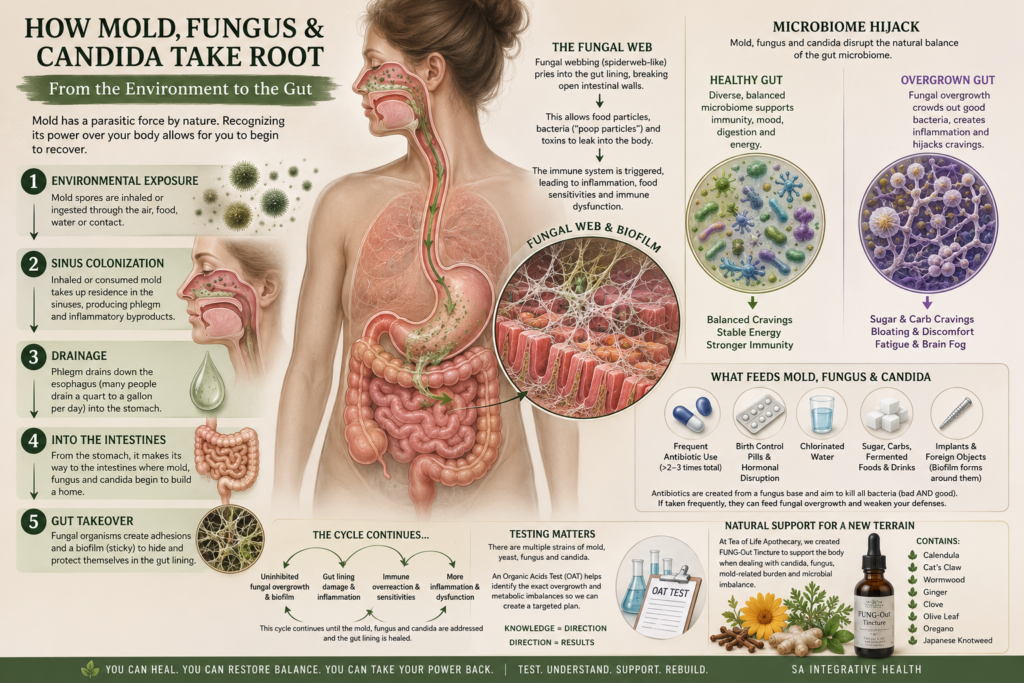
Most commonly, mold enters the body through inhalation or ingestion. We may breathe in mold spores from damp buildings, musty basements, HVAC systems, water-damaged homes, old carpets, pillows, bathrooms, or contaminated air. Mold spores may also enter through food, water, dust, or environmental exposure.
According to the CDC, damp and moldy environments can trigger symptoms such as nasal congestion, sore throat, coughing, wheezing, burning eyes, skin irritation, and worsening asthma or respiratory symptoms in sensitive individuals. Mold exposure does not affect everyone the same way, but for those who are sensitive, immune-compromised, inflamed, or chronically exposed, the impact can be significant.
Once inhaled, mold spores can irritate the sinuses and respiratory tract. In some people, chronic sinus congestion, thick drainage, postnasal drip, coughing, throat clearing, phlegm production, and recurrent sinus issues may become part of the picture.
From the Sinuses to the Gut
Many people do not realize how much sinus drainage they swallow every day. The sinuses naturally drain down the back of the throat, through the esophagus, into the stomach, and eventually into the intestines. When the sinuses are inflamed or colonized with mold, fungus, or yeast, that drainage may carry irritating compounds, microbial byproducts, and inflammatory debris directly into the digestive tract.
This is one reason I believe chronic sinus issues and chronic gut issues often go hand in hand.
The gut is warm, moist, and nutrient-rich. For fungal organisms such as Candida, yeast, and mold-related organisms, this can become the perfect environment to grow when the microbiome is out of balance.
Mold, Candida, Biofilm & the Gut Lining
Candida is a type of yeast that naturally lives in and on the body, including the mouth, skin, intestines, and vaginal tract. In small amounts, Candida is normal. The problem begins when the balance of the microbiome is disrupted and yeast or fungus is allowed to overgrow.
When fungal organisms overgrow, they may form protective communities called biofilms. Biofilm is a sticky, protective coating that allows organisms to hide from the immune system and become harder to address. This is one reason chronic fungal, yeast, and mold-related issues may feel like they keep coming back.
Many people describe fungal overgrowth as “web-like,” and that is a helpful visual. Fungal organisms can grow in branching, thread-like patterns. As this fungal webbing expands, it may irritate the gut lining, disrupt the surrounding microbiome, and contribute to intestinal inflammation.
Research has shown that mycotoxins can affect the gut microbiome and may contribute to inflammation and intestinal barrier disruption. The gut lining is meant to act as a protective wall. When that wall becomes irritated or damaged, larger food particles, bacterial fragments, and inflammatory compounds may pass through more easily. This is often referred to as increased intestinal permeability, or “leaky gut.”
When that happens, the immune system may begin reacting to things it should normally tolerate. This is where food sensitivities, histamine issues, inflammation, immune dysfunction, bloating, skin issues, fatigue, and increased reactivity can begin to take root.
How Mold Can Hijack the Microbiome and Cravings
The gut microbiome is not just about digestion. It influences immune function, inflammation, mood, cravings, metabolism, hormones, and even how the nervous system responds to stress.
When mold, yeast, or fungal organisms begin crowding out beneficial bacteria, the gut environment changes. This imbalance is called dysbiosis. Dysbiosis can make the gut more inflammatory, more reactive, and less able to properly digest, absorb, and eliminate.
Fungal organisms also love sugar and simple carbohydrates. This is one reason people with Candida or fungal overgrowth often struggle with intense cravings for sugar, bread, pasta, sweets, alcohol, or fermented foods. It can feel like a lack of willpower, but often the body is dealing with a microbial imbalance that is influencing cravings from the inside out.
This is why simply “trying harder” does not always work. If the gut terrain is feeding the overgrowth, the cravings may continue until the underlying fungal burden, biofilm, inflammation, and gut lining are addressed.
What Feeds Mold, Fungus & Candida?
Several things can contribute to fungal overgrowth or make the gut environment more favorable for yeast and mold-related issues.
Frequent antibiotic use is a big one. Antibiotics can be necessary and even lifesaving, but they do not only target “bad” bacteria. They can also reduce beneficial bacteria that help keep Candida and other organisms in balance. When the good bacteria are repeatedly wiped out, yeast and fungus may have more opportunity to grow.
Birth control pills, chronic stress, high sugar intake, high refined carbohydrate intake, chlorinated water, poor detox pathways, immune suppression, and repeated exposure to moldy environments may also contribute to imbalance.
Fermented foods and drinks can be helpful for some people, but for others dealing with mold, histamine issues, Candida, or fungal overgrowth, fermented foods may temporarily worsen symptoms. This is why the approach must be individualized.
Implants, Foreign Objects & Biofilm
Another important piece of the conversation is biofilm around implanted materials. Anything placed in the body, including breast implants, birth control implants, hip or knee replacements, rods, screws, dental work, and other foreign materials, can create an environment where the body forms a protective response.
Biofilm can develop on implanted materials, and microbial communities may use that biofilm as protection. This does not mean every implant causes mold or fungal overgrowth, but it does mean biofilm is worth considering when someone has chronic, unexplained inflammation, immune dysfunction, or persistent microbial issues.
Why Testing Matters
There are many different strains of mold, yeast, fungus, and Candida. Guessing is not always the best approach. One person may be dealing with Candida overgrowth. Another may have mold-related mycotoxin burden. Another may have bacterial dysbiosis, parasites, poor bile flow, or immune dysfunction layered into the picture.
This is why testing can be helpful.
An Organic Acids Test, often called an OAT test, can provide insight into yeast and fungal markers, mitochondrial stress, nutrient needs, detoxification patterns, oxidative stress, and microbial imbalance. Once we have a clearer picture of what is happening, we can create a more targeted approach instead of blindly throwing herbs, supplements, or protocols at the body.
The goal is not just to “kill mold.” The goal is to support drainage, detoxification, the microbiome, the gut lining, immune balance, inflammation, and the terrain of the body so the body can begin to recover.
Supporting the Body Naturally
Addressing mold, Candida, fungus, and biofilm requires a layered approach. This may include reducing exposure, improving air quality, supporting sinus drainage, opening detox pathways, improving bowel movements, supporting bile flow, reducing sugar and refined carbohydrates, rebuilding beneficial bacteria, and repairing the gut lining.
Herbs can also be powerful support when used intentionally.
At Tea of Life Apothecary, we created FUNG-Out Tincture to support the body when dealing with Candida, fungus, mold-related burden, and microbial imbalance.
Our FUNG-Out Tincture contains:
Calendula, Cat’s Claw, Wormwood, Ginger, Clove, Olive Leaf, Oregano, and Japanese Knotweed.
These herbs were chosen to support microbial balance, inflammation, gut terrain, immune response, and the body’s natural cleansing pathways.
This tincture is not meant to replace medical care, testing, remediation, or a complete healing plan. But it can be a supportive tool for those who are ready to begin addressing the deeper layers of fungal and mold-related imbalance.
The Bigger Picture
Mold recovery is not just about getting mold “out.” It is about understanding how it got in, where it may be hiding, what allowed it to take root, and how to restore the body’s ability to defend, detoxify, repair, and rebalance.
If you have chronic sinus drainage, recurring Candida, intense sugar cravings, bloating, food sensitivities, skin issues, fatigue, brain fog, inflammation, histamine symptoms, or immune dysfunction, mold and fungal overgrowth may be worth exploring.
The body is not broken. It is responding.
And once you begin to understand what it is responding to, you can begin to take the next right steps.
For those who want a more personalized approach, consider working with SA Integrative Health to explore testing options such as the Organic Acids or MycoTox Test and a targeted natural support plan.
You do not have to guess. You can test, understand, support, and rebuild.