
Your Pillow and Your Health: What You’re Sleeping On Matters More Than You Think
When we think about our health, we often focus on what we eat, how much we move, and how we manage stress. However, there’s something we use every single night that many people forget about…
Your pillow.
It may seem harmless. Soft. Comfortable. Familiar.
But over time, your pillow can quietly become a source of irritation, inflammation, and even illness.
Let’s break this down in a simple, clear way—because once you understand it, you may never look at your pillow the same again.
Why Your Pillow Matters
Your pillow sits directly under your face, scalp, and airway for 6–8 hours every night. That means anything living in your pillow—or on your pillow—has constant contact with your:
- Skin
- Hair
- Eyes
- Mouth and nose
So, if your pillow isn’t clean or is breaking down, it can directly impact your health.
How Often Should You Replace Your Pillow?
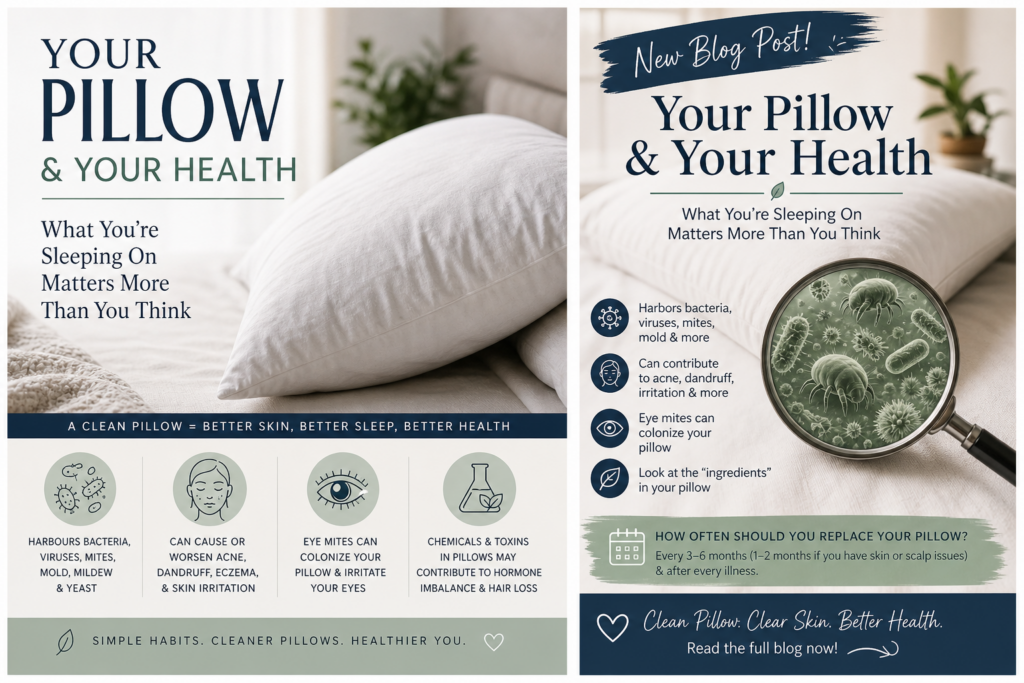
Most research suggests replacing your pillow every 3–6 months with regular use. However, in real life—and especially from a health perspective—you may need to replace it more often.
Consider replacing your pillow every 1–2 months if you:
- Struggle with acne or skin irritation
- Have dandruff or scalp issues
- Sweat heavily at night
- Have very oily skin
- Have allergies or sinus issues
Always replace your pillow after:
- A fever
- A cold, flu, or contagious illness
- Any infection involving the skin, eyes, or respiratory system
Why? Because your pillow can hold onto bacteria and viruses—even after you feel better.
What’s Actually Living in Your Pillow?
Over time, pillows collect more than just dust.
They can become a buildup of:
- Bacteria and viruses
- Dust mites (tiny organisms that feed on dead skin cells)
- Fungi like mold and mildew
- Yeast that can affect the skin and scalp
If you go to bed with wet hair, or if you sweat at night, you create a warm, damp environment—perfect for growth. You can also have issues if you have pillows near a damp environment such as a window, humidifier, etc.
This can lead to:
- Skin breakouts
- Scalp irritation, hair thinning
- Sinus congestion, allergies
- Persistent inflammation of skin and hair follicles
The Hidden Issue: Eye Mites
Most people don’t realize that tiny organisms called Demodex mites live naturally on human skin—especially around the eyelashes. In small amounts, they’re normal. But when your pillow isn’t clean, these mites can multiply and re-colonize your skin every night.
This may contribute to:
- Itchy or irritated eyes
- Redness around the eyelids
- Crusting on lashes (especially in the morning)
Your pillow can act like a re-infection source, preventing your skin and eyes from healing.
Can Your Pillow Affect Hormones and Hair?
Surprisingly, YES!
Many pillows are made with synthetic materials that may contain:
- Chemical flame retardants
- Artificial fragrances
- Petroleum-based foams
These substances can release small amounts of chemicals over time.
For some people, this may contribute to:
- Skin irritation
- Hormone disruption (especially with long-term exposure)
- Hair thinning or scalp inflammation
- Headaches
- Allergies
- Respiratory issues
That’s why it’s important to look at the “ingredients” in your pillow, just like you would your food or skincare.
What About Pillow Protectors?
Pillow protectors can help extend the life of your pillow by blocking moisture and debris.
However, many are made with plastic-based or waterproof layers, which can:
- Trap heat and sweat
- Reduce airflow
- Increase skin irritation for sensitive individuals
So while they can be helpful, they aren’t a perfect solution—and the material matters.
How to Keep Your Pillow Clean
Here’s where simple habits can make a big difference.
Wash your pillowcase at least once a week
- More often if you have acne, dandruff, or sensitive skin
- Use gentle, chemical-free detergents when possible
Avoid going to bed with:
- Wet hair
- Heavy products on your skin or scalp
Let your pillow breathe
- Air it out during the day
- Keep your sleeping area dry and well-ventilated
- Placing it in DIRECT SUNLIGHT for 10-15 minutes on each side can be very effective.
Action Steps: If Your Pillow May Be Affecting Your Health
If you’re dealing with ongoing skin, scalp, or sinus issues, your pillow may be part of the problem—but it can also be part of the solution.
Here are simple, supportive steps you can start with:
For Acne & Skin Irritation
- Switch to a clean, low-toxin pillow (organic cotton, wool, or natural fill if possible)
- Use gentle, natural skin-supporting products to calm inflammation
- Consider ozonated oils (like ozonated olive or coconut oil), which may help support the skin’s natural healing and microbial balance
For Dandruff, Scalp Irritation & Hair Thinning
- Replace your pillow more frequently and avoid sleeping with damp hair
- Use scalp-supporting oils or herbal treatments to calm irritation
Some integrative practitioners use ozone-based therapies, such as low-dose subcutaneous ozone applications along the scalp, to support circulation and microbial balance.
While research is still emerging, early clinical use suggests it may help with chronic scalp conditions and inflammation.
Red light therapy to the scalp is another option being explored. It may help:
- Improve circulation
- Support hair follicles
- Reduce inflammation
For Eye Irritation or “Crusty” Lashes
- Wash pillowcases more frequently (every 2–3 days if needed)
- Avoid reusing the same pillow for long periods
- Keep the eye area clean and supported with gentle hygiene practices
For Sinus Congestion & Allergies
- Replace pillows more often to reduce buildup of dust mites and mold
- Keep humidity levels balanced in your bedroom
- Avoid moisture buildup from sweat or wet hair
The Bigger Picture
Your pillow is one of those things we don’t think about—until it becomes a problem.
However, when you look at it closely, it can play a role in:
- Chronic skin issues
- Eye irritation
- Sinus congestion
- Scalp health, hair thinning/loss
- Overall inflammation
- Hormone Health
- Respiratory Conditions
And the truth is…
You can be doing everything else right—eating well, using good products, taking supplements—but still struggle because of something as simple as what you sleep on.
Final Thoughts
Your pillow should be a place of rest and restoration—not a hidden source of stress on your body.
So take a moment to ask yourself:
When was the last time I replaced my pillow?
If you can’t remember… it might be time.
Sometimes, the smallest changes can create the biggest shifts in how you feel.