
What’s “Generally Fine” and What to Avoid
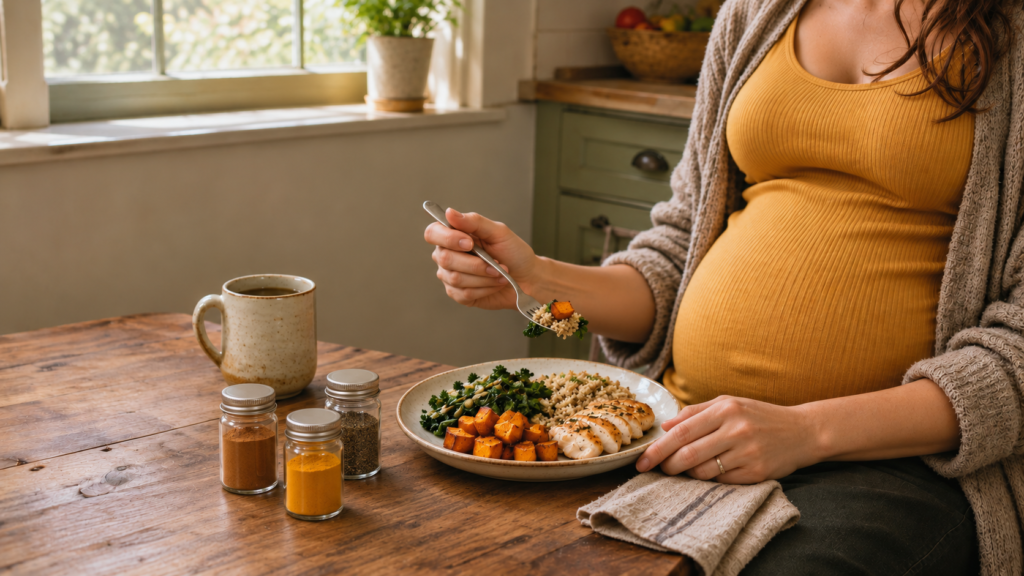
Pregnancy often changes the way we think about what we eat and use. Some people reach for herbs and spices they already know; others start looking for gentler, more natural ways to manage nausea, sleep problems, indigestion, or a cold.
That interest makes sense. But “natural” doesn’t automatically mean safe in every form or amount. A pinch of a spice in dinner is not the same exposure as a strong tea, tincture, capsule, extract, or essential oil.
The practical distinction is food use versus medicinal use. Many familiar culinary herbs and spices are generally considered fine in the amounts normally used to flavor food. A concentrated product can deliver far more of a plant’s active compounds. The dose, preparation, frequency, pregnancy stage, other medicines, and the particular product all matter.
First, what does “safe” mean here?
For this article, “generally fine in food amounts” means using a plant as a normal seasoning in meals or drinks—not taking it repeatedly as a remedy or using a concentrated product.
That distinction matters because even herbs with some pregnancy research have gaps in the evidence. Ginger, for example, has been studied for pregnancy-related nausea, while many other botanicals have limited human pregnancy data. A systematic review also found that herbal products can vary in ingredients and preparation, making their effects harder to predict.
So the “generally fine” list below is not a blanket endorsement of supplements, strong teas, tinctures, or essential oils.
10 common herbs and spices generally fine in ordinary food amounts
These are widely used to season food. Use them as you normally would in cooking. If you want to take one regularly as a remedy, check the product and dose with a qualified pregnancy-care professional who knows your health history.
- Ginger
Fresh or dried ginger in food is generally considered fine. Ginger has also been studied for nausea in pregnancy, but research on supplements does not establish that every ginger product or dose is right for every person. It may interact with some medicines, including medicines that affect blood clotting or blood pressure. - Garlic
Garlic in meals is a common seasoning. Concentrated garlic supplements are different: they may affect blood clotting and can interact with medicines. - Basil
Fresh or dried basil used in meals is a normal culinary use. Avoid treating basil essential oil or concentrated basil products as equivalent to the leaves in food. - Oregano
Oregano sprinkled into a sauce or seasoning mix is a food use. Strong oregano tea and oregano essential oil are concentrated uses and should not be substituted for cooking amounts during pregnancy. - Thyme
Thyme used to season food is different from a concentrated tea, extract, or essential oil. - Rosemary
A little rosemary in a meal is a culinary use. Avoid ingesting rosemary essential oil or using concentrated rosemary preparations as a home remedy during pregnancy. - Parsley
Parsley as a garnish or cooking herb is a food use. Large, repeated medicinal preparations are a different exposure. - Cilantro
Cilantro used in ordinary meals is a common culinary herb. Its use in food should not be confused with concentrated extracts or supplements. - Cinnamon
Cinnamon on oatmeal or in a recipe is not the same as drinking cinnamon tea regularly or taking a high-dose cinnamon supplement. Cinnamon species and product strength vary; concentrated use deserves more caution than a sprinkle in food. - Turmeric
Turmeric used as a seasoning is different from high-dose curcumin capsules or concentrated turmeric extracts. The safety of medicinal turmeric use during pregnancy has not been established.
The same idea applies to other everyday spices: using a small amount to flavor a meal is a different exposure from taking spoonfuls, drinking strong infusions, or using concentrated oils. “I bought it at the grocery store” tells you where it came from—not whether a medicinal dose has been studied in pregnancy.
10 herbs to avoid as remedies during pregnancy
The following herbs should not be used as teas, tinctures, capsules, extracts, or essential oils during pregnancy unless a qualified pregnancy-care professional has specifically reviewed the situation. Some have substantial safety concerns; for others, the concern is that evidence is too limited to support medicinal use.
This list is about remedy use, not trace amounts that might occur in a prepared food. If an herb appears on a product label, don’t panic: set the product aside and ask a qualified professional to review the ingredient, amount, and timing.
- Pennyroyal
Pennyroyal oil is especially dangerous if swallowed. Pennyroyal has been associated with severe toxicity, including liver injury, and should never be used to try to start or end a pregnancy. - Blue cohosh
Avoid medicinal use. It may stimulate uterine activity and has been associated with serious toxicity concerns. - Black cohosh
Do not use it to manage pregnancy symptoms or try to influence labor without specialist direction. - Rue
Avoid internal use. Rue can be toxic and may stimulate uterine contractions. - Wormwood
Avoid medicinal use in any form during pregnancy. Some wormwood contains thujone, and may stimulate uterine contractions. - Mugwort
Avoid medicinal preparations and essential oils. Pregnancy safety is not established, and mugwort is included among botanicals of concern in pregnancy references. - Tansy
Avoid medicinal use. Tansy may stimulate uterine contractions and can be toxic. - Dong quai (Chinese angelica)
Avoid medicinal use during pregnancy. It may affect uterine activity. - Goldenseal
Avoid medicinal use. Pregnancy references flag goldenseal because it may stimulate uterine activity and may be unsafe during pregnancy. - Fenugreek supplements, strong tea, or medicinal doses
Fenugreek is used in food in some cuisines, but concentrated or medicinal use is a different exposure. Pregnancy references advise against amounts greater than those found in food because of safety concerns, including a possible link with birth defects.
Other botanicals that deserve extra caution
This top-ten list is not complete. Licorice root, feverfew, ginkgo, ginseng, and concentrated aloe products also raise pregnancy safety concerns in published references. Red raspberry leaf is often discussed as a late-pregnancy tea, but evidence for benefit and safety remains limited; it may be considered as part of the POST-Partum regimen.
What about chamomile, peppermint, raspberry leaf, and “pregnancy tea”?
These are among the herbs people ask about most often. They are not all in the same category, and a single word like “safe” can hide important differences.
- Peppermint: A cup of peppermint tea is commonly used, but concentrated peppermint oil or supplements are not equivalent to tea. Consider reflux and medication interactions, and ask before using it regularly.
- Chamomile: Evidence in pregnancy is limited. Occasional tea is different from frequent strong capsules, or extracts.
- Red raspberry leaf: It is marketed for late pregnancy and labor preparation, but evidence supporting the benefit is weak and safety has not been well studied. The fact that it is sold as a “pregnancy tea” does not establish that it is right for everyone. We offer Healthy Pregnancy and Healthy Mama Herbal Tea blends. They contain low levels of herbs and are exactly the same with the exception of red raspberry leaves in the Healthy Mama blend.
- Blended pregnancy teas: Check every ingredient. A blend may contain green tea, black tea or various herbs, and the label may not make the amount of each one clear. Read our article on Earl Grey Tea.
A simple way to think about spices
A spice can be ordinary food in one context and a concentrated botanical in another.
| Use | Example | How to think about it |
| Seasoning | Cinnamon in oatmeal; turmeric in soup; sage in stuffing | Usually a food-level exposure |
| Strong or repeated tea | A daily infusion made with several spoonfuls of an herb | More concentrated than seasoning; check the specific plant |
| Supplement or extract | Capsules, tinctures, standardized extracts, “detox” blends | Medicinal exposure; review ingredients and dose before use |
| Essential oil | Swallowed drops or undiluted topical application | Highly concentrated; avoid internal use during pregnancy unless specifically directed by a qualified professional |
There is no universal “safe amount” that applies to every herb, product, trimester, and pregnancy. Products may differ in species, plant part, concentration, and quality. A label saying “natural,” “traditional,” or “pregnancy support” does not answer those questions.
Before using an herbal product
A practical, non-alarmist check can help you make a more informed choice:
- Write down the exact product and all ingredients. Include teas, tinctures, powders, capsules, essential oils, and multi-ingredient blends.
- Note how you plan to use it. A pinch in food, a cup of tea, a daily tincture, and a concentrated extract are different exposures.
- Check the pregnancy stage and your health history. Bleeding concerns, a high-risk pregnancy, liver or kidney conditions, allergies, and other factors can change the advice.
- Review medicines and supplements for interactions. “Herbal” does not mean interaction-free.
- Ask a qualified pregnancy-care professional with the product label in hand. A clinician, pharmacist, or appropriately trained herbal practitioner can help assess the specific product and your circumstances.
If you already used an herb or spice, don’t assume harm has occurred. Write down what you took, how much, and when, then contact your pregnancy-care professional for individualized guidance. Seek urgent care for severe symptoms such as heavy bleeding, fainting, trouble breathing, or severe abdominal pain.
The takeaway
You do not need to fear every herb in your spice cabinet. Ordinary culinary use is different from medicinal use. A small amount of ginger, garlic, basil, oregano, rosemary, cinnamon, or turmeric in food is not the same as a tincture, supplement, or essential oil.
At the same time, herbs can have real biological effects. Some should be avoided as remedies during pregnancy, and many others simply have not been studied well enough to recommend confidently. Be especially cautious with products meant to trigger labor, “cleanse” the body, balance hormones, or treat pregnancy symptoms.
The most useful question is not just “Is this herb safe?” It is: Which plant, which part, in what preparation, at what dose, how often, and at what point in pregnancy?
This article is presented by Tea of Life Apothecary and is for educations not. This is not meant as individualized medical advice. It does not diagnose, treat, or prevent any condition. Discuss herbal products and supplements with a qualified pregnancy-care professional before use.