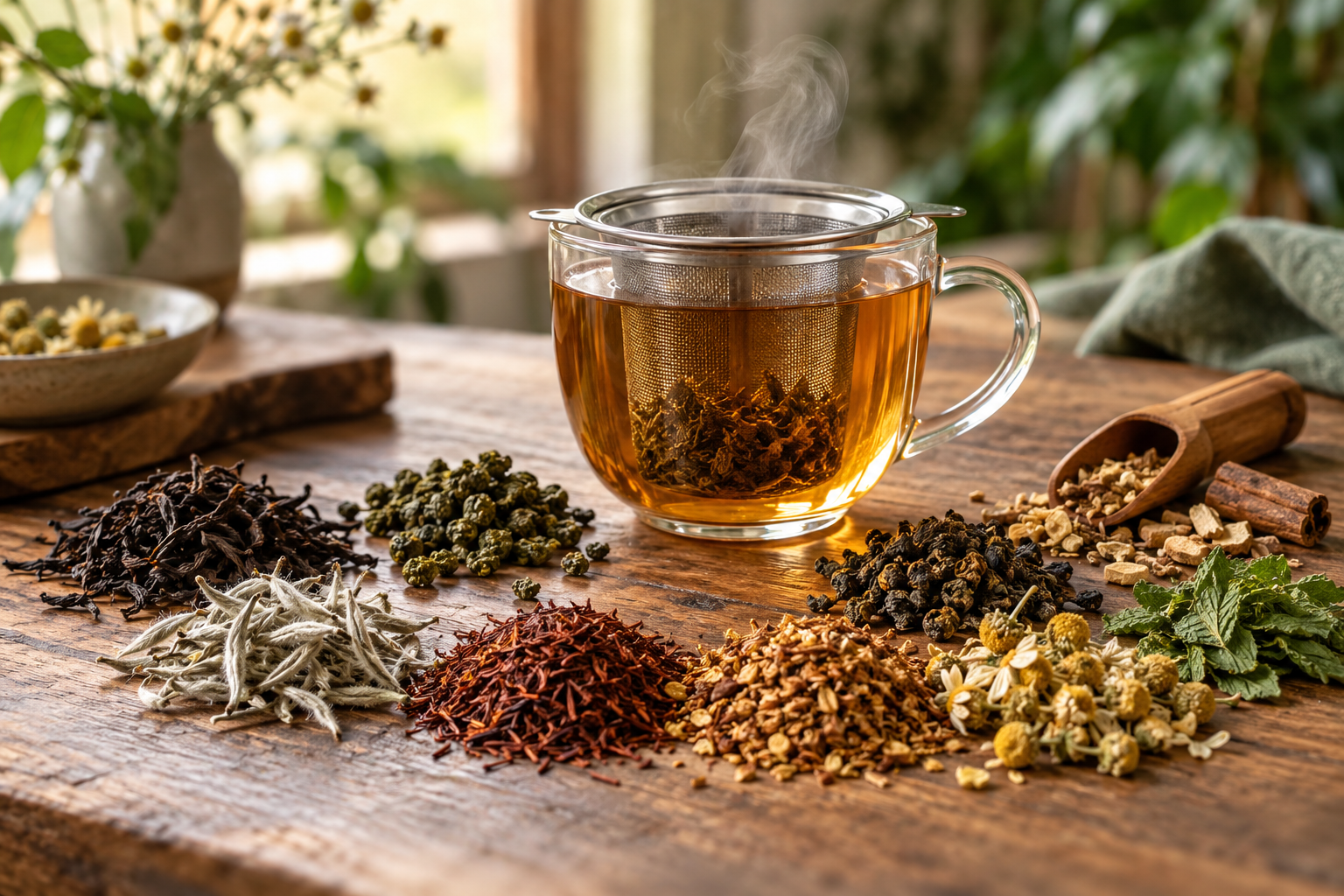

There’s a reason herbal tea has been treasured across cultures for centuries. From ancient Chinese medicine to Egyptian rituals, herbs steeped in hot water have long been used as both a soothing drink and a natural remedy. Today, modern research confirms what tradition has always known: herbal teas offer genuine healing benefits for the body and mind. Whether you’re struggling with digestion, seeking relaxation, or simply looking to incorporate wellness into your daily routine, herbal teas can play a supportive role.
In this guide, we’ll explore the healing properties of herbal tea, with a focus on blends that support digestive health, ease stress, and promote restful sleep. By understanding which herbs serve which purpose, you can create a tea ritual that nurtures your body from the inside out.
The Healing Tradition of Herbal Tea
The appeal of herbal tea goes far beyond flavor. Herbs have been used as medicine for thousands of years, and many of the same plants are still enjoyed in Texas today. Unlike true teas (black, green, oolong), herbal teas are naturally caffeine-free and often contain a blend of leaves, flowers, roots, and fruits. This makes them versatile, nourishing, and accessible to nearly everyone.
Some teas, like peppermint and ginger, are known for aiding digestion, while chamomile and valerian root are valued as sleep aid herbal teas. Others, like hibiscus or rooibos, provide antioxidants that support overall health. So before you know How to Brew the Perfect Cup of Herbal Tea, you should know the healing power first that originates from bioactive compounds such as flavonoids, essential oils, and antioxidants that interact with the body in gentle, restorative ways. By selecting the right herbs, you’re not just drinking a beverage; you’re practicing an age-old form of self-care.
Herbal Tea for Digestive Health
Digestive troubles are among the most common reasons people turn to herbal tea for digestion. Instead of relying solely on medications, many find relief in natural remedies that calm the stomach and support healthy digestion.
- Peppermint Tea: Peppermint contains menthol, which relaxes the digestive tract muscles. It helps reduce bloating, gas, and cramping, making it one of the most popular teas for gut comfort.
- Ginger Tea: A natural anti-inflammatory, ginger stimulates digestion and reduces nausea. It’s particularly effective for motion sickness, indigestion, or mild upset stomachs.
- Chamomile Tea: Beyond relaxation, chamomile soothes the stomach lining, reducing discomfort from acid reflux and easing mild digestive pain.
- Fennel Tea: Known for its mild licorice-like flavor, fennel reduces bloating and supports smoother digestion after meals.
By incorporating these teas after dinner or during times of discomfort, you give your digestive system a natural, calming boost.
Herbal Tea for Stress and Relaxation
Modern life is fast-paced, and stress has become a near-daily challenge. Here’s where the calming, healing properties of herbal tea truly shine. Certain herbs naturally calm the nervous system, helping reduce anxiety and promote relaxation without side effects.
- Chamomile: Perhaps the most iconic calming tea, chamomile contains apigenin, an antioxidant that binds to brain receptors to ease stress and encourage relaxation.
- Lavender: Known for its fragrant aroma, lavender tea helps calm nerves, ease tension headaches, and provide a sense of peace.
- Lemon Balm: A gentle herb from the mint family, lemon balm helps reduce restlessness and promotes focus, making it an ideal tea for both daytime and evening relaxation.
- Passionflower: Traditionally used to ease anxiety, passionflower tea supports the brain’s natural production of calming neurotransmitters.
Adding one of these teas to your daily ritual—whether mid-afternoon or before bed—can be a simple yet powerful act of self-care.
Sleep Aid Herbal Teas
Struggling with sleep? You’re not alone. Millions of people deal with insomnia or restless nights. Thankfully, herbal sleep aid teas can help promote better rest in a natural way. Instead of reaching for heavy medications, these herbal infusions gently encourage your body to wind down.
- Valerian Root: Often called “nature’s tranquilizer,” valerian helps increase GABA, a brain chemical that promotes sleep and reduces anxiety.
- Chamomile: Doubles as both a relaxation aid and a gentle sleep enhancer. It’s best sipped about 30 minutes before bed.
- Linden Flower: Traditionally used in Europe, linden tea calms the nervous system and prepares the body for restful sleep.
- Rooibos with Lavender: This caffeine-free red tea pairs well with lavender for a soothing bedtime blend that relaxes both body and mind.
By incorporating these teas into your nightly routine, you create a calming ritual that signals to your body it’s time for rest.
Antioxidants and Overall Wellness
In The Ultimate Guide to Herbal Tea, the most talked about ingredient is antioxidants and overall wellness. Beyond digestion and sleep, the healing properties of herbal tea extend to general wellness. Many herbs are rich in antioxidants, which help combat free radicals, alleviate inflammation, and promote overall well-being.
- Hibiscus Tea: Rich in vitamin C and anthocyanins, hibiscus supports heart health and helps regulate blood pressure.
- Rooibos Tea: Native to South Africa, rooibos is caffeine-free and full of antioxidants that promote skin health and boost immunity.
- Turmeric Tea: A warming, golden tea with anti-inflammatory properties that support joint and immune health.
Drinking these teas daily can complement a healthy diet and lifestyle, providing your body with plant-based protection against stress and aging.
FAQs: Healing with Herbal Tea
Is herbal tea safe for everyone?
Most people can enjoy herbal teas, but those with allergies, medical conditions, or who are pregnant should consult a healthcare professional.
Can I drink herbal tea every day?
Yes. Herbal teas are generally safe for daily consumption, especially caffeine-free options.
When is the best time to drink herbal tea for digestion?
After meals is ideal, especially for peppermint, ginger, or fennel teas.
How long before bed should I drink herbal tea?
About 30–45 minutes before bedtime works best.
Can I mix different herbal teas together?
Absolutely! Many blends combine herbs to enhance both flavor and benefits.
Closing: Sip Your Way to Wellness
Brewing a cup of herbal tea is more than a daily ritual it’s a way of inviting nature’s healing powers into your life. Whether you’re easing digestion with peppermint, calming stress with lavender, or finding sleep through chamomile, every cup holds centuries of wisdom and wellness in its warmth.
At Tea of Life Apothecary, we believe that each sip is a step toward balance, health, and self-care. So the next time life feels heavy, or your body needs support, reach for your favorite herbal blend. Let the steam rise, inhale the soothing aroma, and remember: sometimes, healing begins with something as simple as a cup of tea.Discover your perfect wellness blend in the Tea of Life Apothecary herbal collection. Because every sip is a chance to heal, restore, and thrive.