
Disease vs. Medication
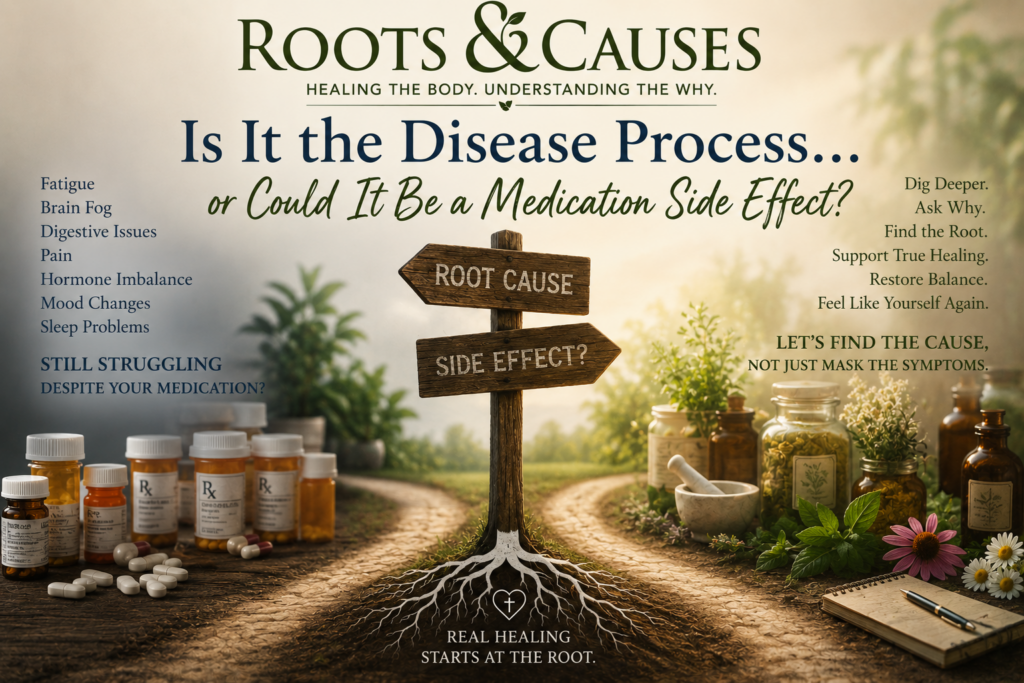
“Medicine is one of the greatest gifts we have. But every medication deserves to be reviewed over time. Sometimes the next step in healing isn’t adding another prescription—it’s taking a closer look at the ones you’re already taking.”
Have you ever looked at your medication list and asked yourself one simple question? “Do I know why I’m taking every one of these pills?” If the answer is no, you’re not alone.
Many people begin with one medication. Then another doctor adds a second. A specialist prescribes something else. Months or years later, another medication is added to treat a new symptom. Before long, it’s easy to find yourself taking five, six, or even ten medications every day.
That doesn’t mean those medications were prescribed incorrectly. In many cases, each medication had a good reason for being started.
The REAL question is: Has anyone stopped to look at the whole picture?
This isn’t about blaming doctors, and it isn’t about criticizing medicine. It’s about making sure the treatment plan that made sense five years ago still makes sense today.
Medicine Saves Lives
Let’s start with something important. Medicine saves lives every single day. Antibiotics save lives. Blood pressure medications, insulin, thyroid medications all help reduce the symptoms and risks. Cancer treatments may extend or save lives.
As a nurse for nearly 30 years, I have seen modern medicine accomplish incredible things. This article is not about telling people to stop taking medications and it’s not about fear.
It is about becoming an ACTIVE PARTICIPANT in your healthcare. Because at the end of the day…. no one will ever care about your health as much as you do.
A Lesson I Learned the Hard Way
Many years ago, I was involved in a serious car accident. I chose not to take narcotic pain medication. I still struggled with chronic discomfort and was prescribed 800 mg ibuprofen. I took it faithfully because I believed I was doing exactly what I had been instructed to do.
Days turned into weeks, and weeks into months. Then something frightening happened. I began passing large amounts of blood in my stool. My hemoglobin dropped, I was having several GI related issues and abdominal pain. Eventually I underwent a colonoscopy. I was told my colon was extremely inflamed and the lining was so thin it resembled tissue paper. Looking back, I realized something important. No one had ever explained the risks of taking high-dose NSAIDs for an extended period of time. No one had told me when it was time to stop. I was given a prescription of #90 tablets. No one told me that 800mg of Motrin should not be taken more than 3 times a day for no more than 3 days! 3 DAYS! I had taken it for several months. My primary carry and my specialist BOTH looked at my chart and never questioned it. I was a NURSE and didn’t know to question it.
That experience changed the way I think about medications. Not because ibuprofen is a bad medication. Because every medication has benefits… …and every medication has risks.
Every Medication Is a Trade-Off
There is no such thing as a medication with NO side effects. Often those side effects are mild, but sometimes they are very serious. Sometimes they don’t appear until months or years later. That doesn’t mean you shouldn’t take medications.
It means you should understand them.
Before starting any medication, consider asking your healthcare provider:
- Why do I need this medication?
- What is it treating?
- How long should I expect to take it?
- What are the most common side effects?
- What symptoms should prompt me to call you?
- Could this interact with anything else I take?
- Is there anything I can do through nutrition, movement, stress reduction, or other lifestyle changes that might support my treatment?
These aren’t challenging questions. They’re responsible questions. And it is YOUR responsibility to advocate for yourself and UNDERSTAND everything you have been prescribed.
When One Medication Leads to Another
One of the biggest challenges in healthcare today is something called polypharmacy.
Polypharmacy simply means taking multiple medications at the same time—commonly defined as five or more. Sometimes that’s necessary, but OFTEN it is NOT. WHY? because the more medications someone takes, the greater the chance of drug interactions, side effects, and adverse drug events.
In some cases, a medication causes a symptom that looks like a new illness. Instead of recognizing it as a possible side effect, usually another medication is added to treat that symptom. This is sometimes called a “prescribing cascade.”
For example:
A medication causes constipation. A new medication is prescribed for constipation. This NEW medication causes diarrhea. So, another medication is added to slow the diarrhea. Soon, the original issue is difficult to recognize. Don’t misunderstand, this doesn’t happen because anyone intended harm. But it can (and does) happen because healthcare is complex, and different clinicians may only see one part of the picture.
Could a Medication Be Contributing to the Way You Feel?
Many medication side effects develop gradually leading people to assume they’re simply getting older.
Some symptoms that may be related to medications include:
- Brain fog
- Fatigue
- Dizziness
- Balance problems
- Constipation
- Diarrhea
- Dry mouth
- Muscle aches
- Joint discomfort
- Poor sleep
- Mood changes
- Memory concerns
- Reduced appetite
- Weight changes
These symptoms can also be caused by medical conditions. That’s exactly why it’s important to have a thoughtful conversation with your healthcare provider instead of assuming the cause.
A Story That Changed My Perspective
Recently, someone close to me had been living with severe chronic pain for years. After multiple surgeries, several medications had been added over time. (10+ years) Even under close medical supervision, this person began to expereicne an INCREASE in issues. MORE pain. More brain fog. MORE muscle spasms…. MORE GI issues.
They had a serious discussion with their primary care provider, and it was decided that this person would begin weaning off many medications to see what TRUE disease process was and what was PHARMACY related. All of their medications were slowly reviewed and reduced. As each medication was carefully adjusted, something unexpected happened.
Some of the symptoms that had been assumed to be part of the original condition actually improved. Not because the condition disappeared, but because medication SIDE EFFECTS had become part of the overall picture.
That experience reinforced something I now tell many patients:
Sometimes we need to ask not only, “What condition am I treating?” but also, “Could one of these medications be contributing to what I’m feeling?”
Knowledge Is Empowering
Don’t misunderstand, the goal isn’t to become your own doctor. The goal is to become an informed patient.
Read your appointment summary along with the information that comes with your prescriptions.
Keep an updated medication and supplements list.
Ask questions! KNOWLEDGE IS POWER!
Understand why each medication is prescribed. Most people can only tell me: “I take a yellow pill and a white pill”. This is unacceptable.
Know the common side effects.
Schedule regular medication reviews—especially if you’re taking several prescriptions or have started seeing multiple specialists.
Your pharmacist can also be an excellent resource for reviewing medications and identifying potential interactions.
What Does This Have to Do With Integrative Health?
At SA Integrative Health, we believe the best care happens when conventional medicine and integrative medicine work together. Sometimes medications are exactly what’s needed. However, the overall goal is to educate our patients that nutrition, sleep, stress management, physical therapy, or herbal support can complement medical treatment.
By improving gut health, reducing inflammation, or addressing nutrient deficiencies can support overall wellness. The goal is to understand the whole picture and create the most appropriate plan for each individual.
Healing Begins With Curiosity
One of my favorite questions to ask is: “What if there’s another piece of the puzzle we haven’t looked at yet?” Sometimes that piece is stress, sometimes sleep, it would be gut health, often our nutrition plays a large role. It also requires taking a fresh look at a medication list that hasn’t been reviewed in years.
The Bottom Line
You are not your diagnosis.
You are not your symptoms.
And you are certainly not a list of medications.
A diagnosis helps guide treatment, but it does not define who you are. Medications are powerful tools, they deserve respect, they deserve understanding, and most importantly, they deserve regular review.
Healing doesn’t always begin with adding something new. It begins by asking better questions. The more you understand about your health… the more empowered you become to partner with your healthcare team and make informed decisions about your future.
A Final Thought
If you’re taking multiple medications, DO NOT stop them on your own. Many prescriptions require careful monitoring or gradual tapering. To stop them suddenly can be dangerous.
Instead, schedule an appointment with the healthcare professional who prescribes your medications. Bring an updated medication list, ask questions, discuss any symptoms you’ve noticed, and ask whether each medication still has a clear purpose in your care. You may need to be prepared to push back a little during this discussion.
Remember, the goal isn’t to take the fewest medications possible. The goal is to take the right medications, for the right reasons, at the right time.
That’s not anti-medicine…… that is GOOD medicine.